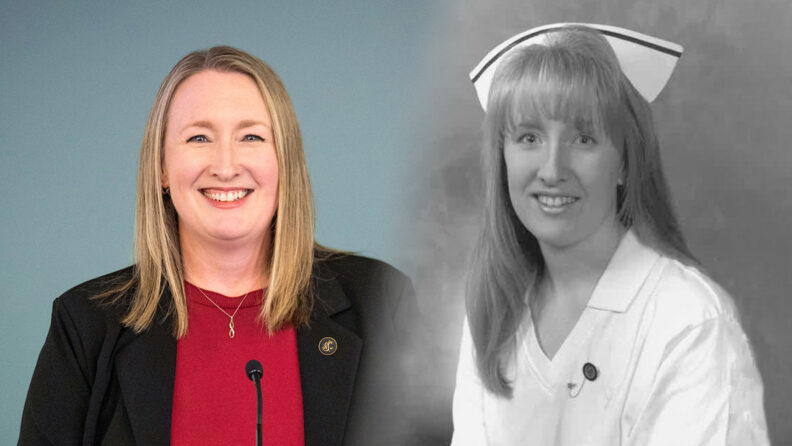
When Anne Mason was a high school student in Walla Walla, she wasn’t searching for a future as a college leader.
She was simply looking for a place to belong.
Not an athlete and unsure where she fit among her peers, Mason was intrigued when representatives from Walla Walla Community College visited her high school to discuss a new opportunity called Running Start. One option caught her attention: a certified nursing assistant program.
“I thought it might be something different than what everyone else was doing,” Mason said.
At the time, she was already volunteering as a candy striper at a local hospital. The CNA program provided her first opportunity to work directly with patients and quickly reinforced an interest that had been quietly developing through family experiences and mentorship.
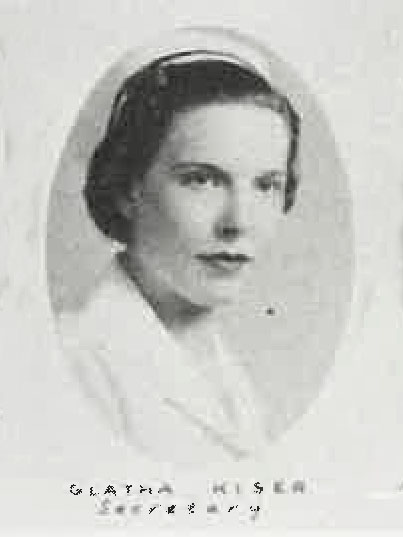
One of those influences was her paternal grandmother, a 1938 graduate of the Deaconess School of Nursing in Spokane. During visits to her grandmother’s home in Oregon, the two often exchanged stories about nursing.
When Mason graduated from nursing school years later, her grandmother offered to buy her a graduation gift. Mason asked for a stethoscope.
“She told me that was something only physicians used,” Mason recalled with a laugh. “It showed how much the profession had changed between her generation and mine.”
Another influence came from Opal Wallace, the charge nurse who supervised evening shifts at the nursing home where Mason worked as a teenager.
“She was always willing to teach and guide and provide support,” Mason said. “She just continued to reinforce that this was the profession I wanted to go into.”
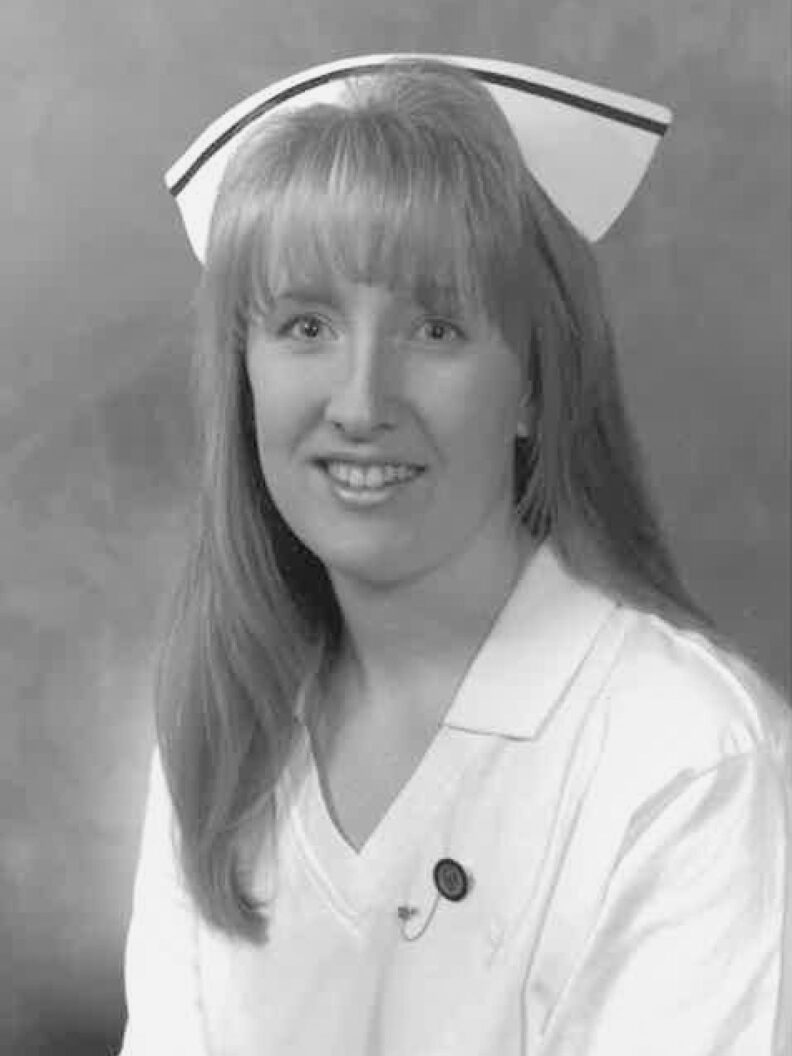
Mason completed her associate degree in nursing shortly after high school, becoming one of the youngest students in her graduating class. She remembers feeling excited but uncertain as she entered practice in the late 1990s.
“I remember being very nervous that I didn’t know enough,” she said.
Her first nursing job took her to Dayton, Washington, where she worked in a nursing home connected to a small rural hospital. Often the only licensed nurse on duty, Mason quickly learned responsibility, collaboration, and the value of asking questions.
“If I could talk to myself as a new graduate nurse, I would say, ‘Calm down,'” Mason said. “There will be a lot of people interested in sharing their knowledge with you.”
The experience also introduced her to a patient population that would ultimately shape her career. Residents included individuals living with chronic mental illness who required skilled nursing care.
“I didn’t realize at the time how influential that would become,” Mason said.
Several years later, a personal tragedy changed the direction of her educational journey. After the death of her husband in a car accident, Mason found herself raising a young daughter while working as a nurse in Walla Walla.
“I needed to find a career path that wouldn’t obligate me to shift work,” she said. “I was a single parent and trying to find a way to make nursing work better for my family.”
At the same time, she knew she could not leave the community where she had a job, a home, and a support system.
That challenge led her to Washington State University’s RN-to-BSN program, delivered through an innovative telecommunications partnership with Walla Walla Community College.
“It gave me access to higher education without disrupting my daughter’s life or my support system,” Mason said.
The experience broadened her view of nursing. Faculty members brought perspectives from large health systems, leadership roles, and diverse practice environments across the Pacific Northwest.
“It was mind-opening to hear all the different stories people were sharing,” Mason said. “It expanded my experience and knowledge without having to move.”
Just weeks after beginning the program, Mason and her classmates watched the events of Sept. 11, 2001 unfold during class.
“I will never forget that day,” she said. “All of our classes became conversations about public health, mental health, and what was going to happen nationally.”
After earning her BSN, Mason entered WSU’s Master of Nursing psychiatric nurse practitioner program. While she initially considered women’s health and family practice, mentorship and clinical experiences with incarcerated populations helped her discover a passion for psychiatric nursing.
“It was powerful to see how you could impact a patient population that often came from underserved environments,” Mason said.
She spent five years in Walla Walla providing psychiatric care within the Washington State Department of Corrections, helping individuals address mental illness and substance use disorders while preparing to return to their communities.
Over time, psychiatric nursing taught her lessons that continue to shape her practice, teaching, and leadership.
“Listen carefully,” Mason said. “Make sure you understand the question the patient is asking or the story the patient is telling.”
As a nurse practitioner, educator, and leader, Mason has carried that philosophy forward.
After completing her master’s degree, she remained connected to WSU as part-time faculty while continuing clinical practice. Teaching quickly became part of her professional identity.
“I never gave it up,” she said. “I was a nurse practitioner and faculty at WSU.”
Her commitment to education eventually led her to pursue a Doctor of Nursing Practice degree at the University of Colorado, one of the nation’s earliest nurse practitioner training programs.
At the time, WSU had not yet launched a post-master’s DNP pathway. Mason chose Colorado because of its longstanding leadership in advanced practice nursing education and its history as the birthplace of the nurse practitioner role.
Balancing doctoral education with work and family required sacrifice. During the final year of the program, Mason often woke at 3 a.m. to complete coursework before the demands of the day began.
“My children were a huge motivating factor,” she said. “I wanted them to see that challenging goals are worth pursuing.”
Those experiences prepared her for a series of leadership roles at WSU, including psychiatric mental health nurse practitioner coordinator, DNP program director, associate dean for academic affairs, and now interim dean.
Looking back, Mason says she never set out with a grand plan.
“I didn’t achieve this through one big idea,” she said. “I walked through one door, saw an opportunity, and took the next step.”
Today, as interim dean of the college where she earned both her BSN and master’s degree, she often shares that perspective with students.
“I hope my story is relatable,” Mason said. “You don’t have to have everything figured out. Look for opportunities. Take a step. Try something new. Explore a new area. Take a chance.”
For Mason, nursing has never been about a single destination.
It has been a journey of service, education, and continual growth — one opportunity at a time.