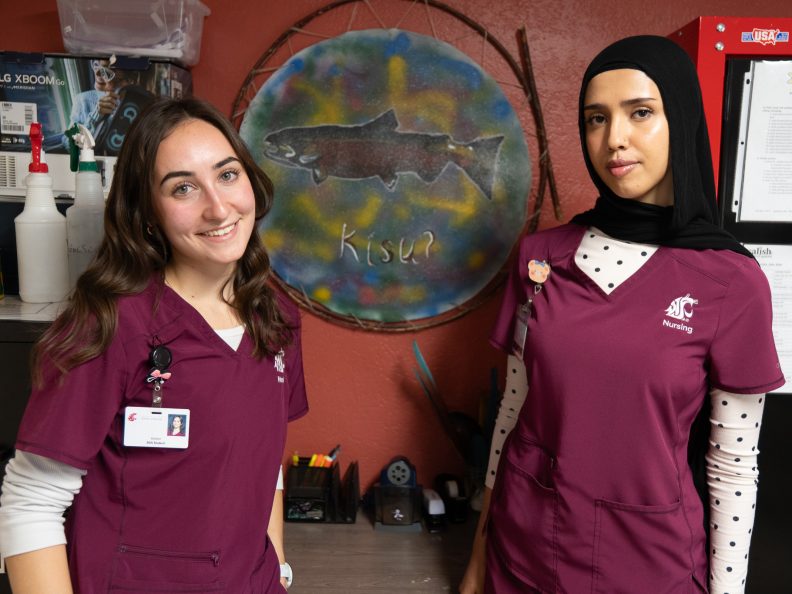
WSU College of Nursing students partnered with Spokane Regional Health District (SRHD) and Spokane community organizations to support vaccine clinics in October. Through their community health clinical rotations, students helped organize, and staff clinics at Family Promise, House of Charity, and Salish School of Spokane (SSoS).
Weekly clinical rotation helped students prepare for vaccine clinic
At Salish School of Spokane, a request for a vaccine clinic grew from an ongoing partnership with the College of Nursing.
Two nursing students in the Community Health Nursing Practicum course, Shorooq Al Amri and Esther Roeber, spent six weeks at the Salish School of Spokane before the Oct. 13 clinic. During their rotation they provided health promotion education for the students.
To prepare for the clinic, the students reviewed immunization records, identified needed vaccines, and developed catch-up plans. They shared their findings with their clinical faculty, Natsuko Wood, PhD, RN, who served as a liaison for the vaccine clinic, collaborating with the Salish School of Spokane and Spokane Regional Health District.
Wood shared, “Sharooq and Esther first brought up the Salish School’s request for a vaccine clinic during one of our post-clinical conferences. I submitted a formal request through the Spokane Regional Health District website and coordinated directly with their vaccine team. From there, we established a clinic date that accommodated all partners and worked closely with the Salish School of Spokane to distribute consent forms, and they promoted the event to their families. Through this community engagement, the students gained invaluable experience in coordination, community health promotion, and cross-organizational collaboration.”
On clinic day, Al Amri and Roeber administered vaccines to students, staff, and their families. Meghan Fitzpatrick, DNP-PH, RN, a clinical assistant professor and community nursing lead, and the Health District team supported vaccine preparation and documentation.
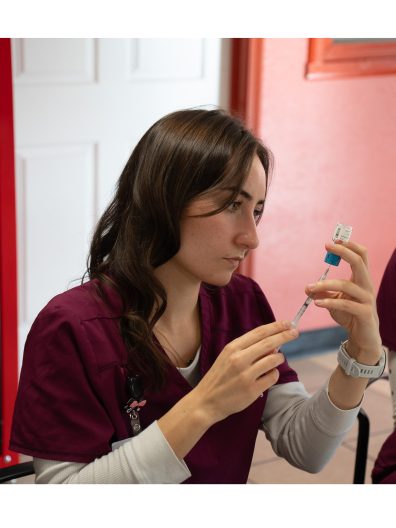
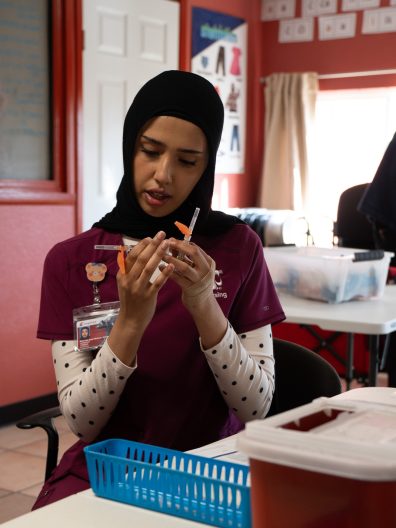
Nursing students Esther Roeber and Shorooq Al Amri at the Salish School of Spokane. Photo: Brad Schwartz, WSU College of Nursing.
The students’ weekly clinical rotation helped establish familiarity with the students and staff before the clinic.
“When it came time for vaccinations, the children already knew us, which helped them feel more comfortable throughout the process,” Al Amri said.
Wood described the vaccine clinic as a success: “We were thrilled by the incredible turnout, serving 42 participants instead of the originally scheduled 15. In total, our students helped vaccine 22 children (administering 37 vaccines) and 20 adults (administering 61 vaccines). It was a fantastic learning experience for our students to help so many students, staff, and their families receive multiple vaccines.”
Learning from the school community
Salish School of Spokane’s mission centers on preserving and revitalizing Southern Interior Salish languages, the first languages of the Spokane region. The nursing placement gave students opportunities to learn about the historical background, culture, and community of these Indigenous peoples while building trusting relationships through health promotion education.
Al Amri said Dr. Kim Richards, Director of the Salish School of Spokane, helped the students identify relevant health topics and adapt their teaching to children’s ages and personalities.
“Working with the Salish School community taught me the importance of culturally sensitive care and taking the time to understand the population we’re working with,” Al Amri said.
“The vaccine clinic with WSU fits right into the mission of Salish School of Spokane”, shared SSoS Principal Christopher Parkin. “We are engaged in dynamic Salish language revitalization to power cultural renewal and build a stronger, healthier community, and our partnership with WSU College of Nursing is helping us to achieve our mission. That partnership provides health mentoring to our K-9 immersion school students and helps to protect the physical health of our students, staff, and families with vaccines.”
SSoS Principal Christopher Parkin
The experience also prompted Al Amri to think more carefully about children’s emotional well-being. During one classroom activity, a child’s response reminded her that a student’s level of participation may reflect experiences beyond the classroom.
“After that, I became more intentional about spending time with the children individually, especially those who seemed less engaged, and making sure everyone felt included,” she said.
Roeber said the weekly clinical included games, lessons, and prizes tailored to each class. The experience reinforced the importance of helping children feel comfortable and supported while learning about health.
“They may not often remember what we taught the week before, but they remember how we made them feel,” Roeber said. “It is more important to prioritize a safe, fun environment, rather than making sure they received every bit of information we provide.”
Connecting coursework with community practice
The clinics connected classroom learning with assessment, health education, immunization delivery, communication, and collaboration.
Community nursing lead, Megan Fitzpatrick, DNP-PH, RN said, “by working with families, school personnel, Tribal partners, and public health professionals, students gain firsthand experience assessing community needs, supporting population health initiatives, and developing nursing interventions grounded in partnership and cultural humility”.
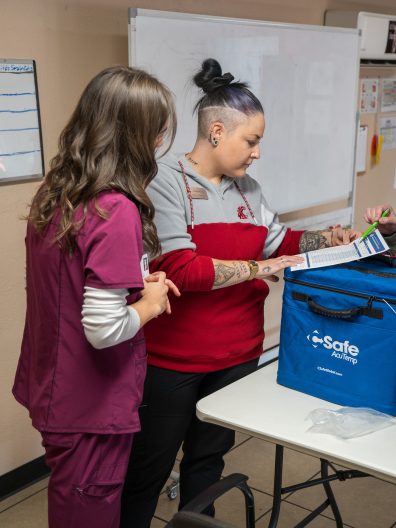
Ester Roeber and Megan Fitzpatrick, DNP-PH, RN. Photo: Brad Schwartz, WSU College of Nursing.
Community partners helped students understand local priorities and cultural perspectives, Fitzpatrick added, strengthening their ability to provide care responsive to the populations they serve.
“These experiences help to prepare future nurses to build meaningful partnerships, promote health equity, and approach nursing practice with cultural humility and a strong public health foundation,” she said.
For Al Amri, who hopes to work in pediatrics, the experience demonstrated how nurses can recognize a community health need and help address it.
“It was rewarding to see our work turn into something that directly benefited the school community,” she said.
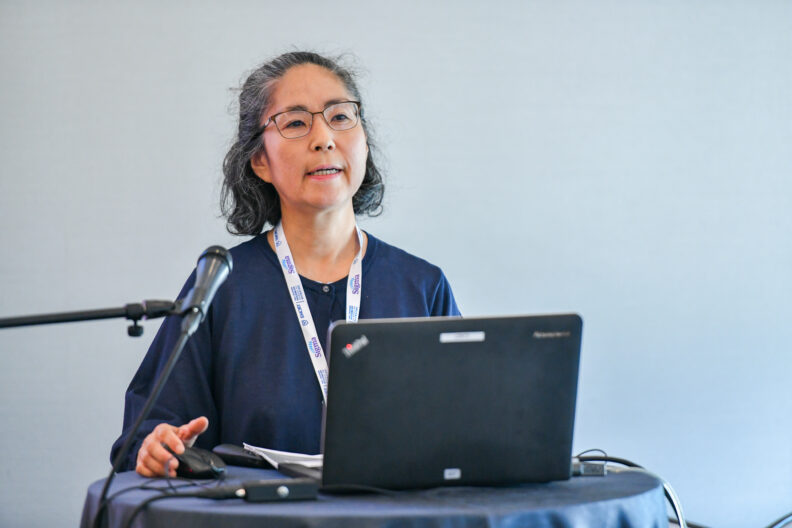
As a land-grant university, Washington State University’s mission is deeply rooted in community service, and this vaccine clinic perfectly aligns with those core values. Nationally, Indigenous communities face significant health disparities, including historically lower vaccination rates. Through our ongoing community-academic alliance with the Salish School of Spokane, we are honored to help meet these vital health care needs directly. Moving forward, the College of Nursing is fully committed to sustaining this trusted relationship, with future student cohorts continuing to provide health education and clinical outreach for Salish families.
– Natsuko Wood, PhD, RN
Students organize clinics at two Spokane shelters
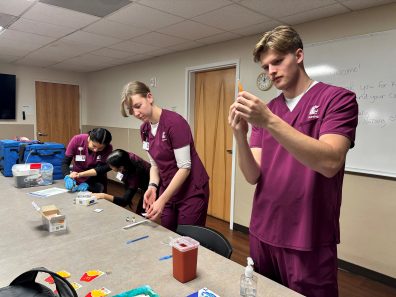
Six WSU community health nursing students helped organize and staff vaccine clinics at Family Promise and House of Charity on October 7, collaborating with Spokane Regional Health District and staff at both organizations.
At Family Promise, a shelter serving families experiencing homelessness, students provided 15 vaccines to nine people.
At House of Charity, a shelter serving men experiencing homelessness, students provided 30 vaccines to 14 people as the culmination of their community health clinical experience.
Together, the clinics provided 45 vaccines to 23 people.

Cindy Brigham-Althoff, DNP, ARNP, CNM, a teaching track associate professor at the WSU College of Nursing, shared that students worked directly with Health District personnel and community partner staff to organize the events.
“Our students are caring for the health of our community in a very tangible way!” Brigham-Althoff wrote.