by Eva Gill
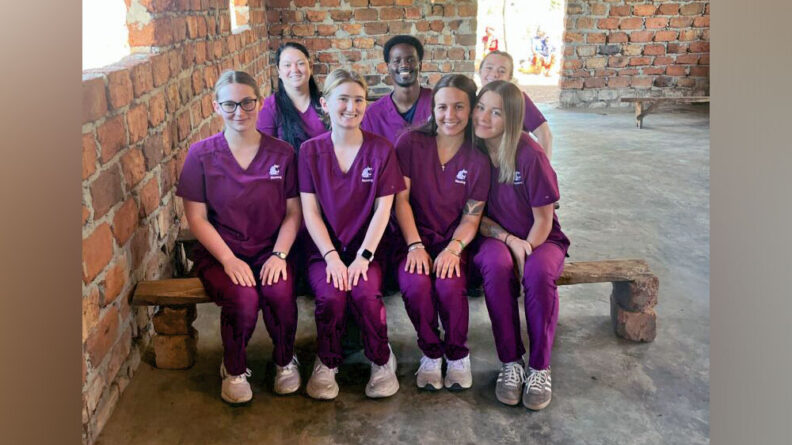
Today, our group of WSU nursing students traveled about an hour and a half to a small village in Zambia called Kanyenda. Our goal was to help run a pop-up clinic organized by Kafakumba, providing care to individuals who may otherwise go long periods without seeing a health care provider. Each of us stepped into a specific role, working together to create a system that could serve as many people as possible in a short amount of time.
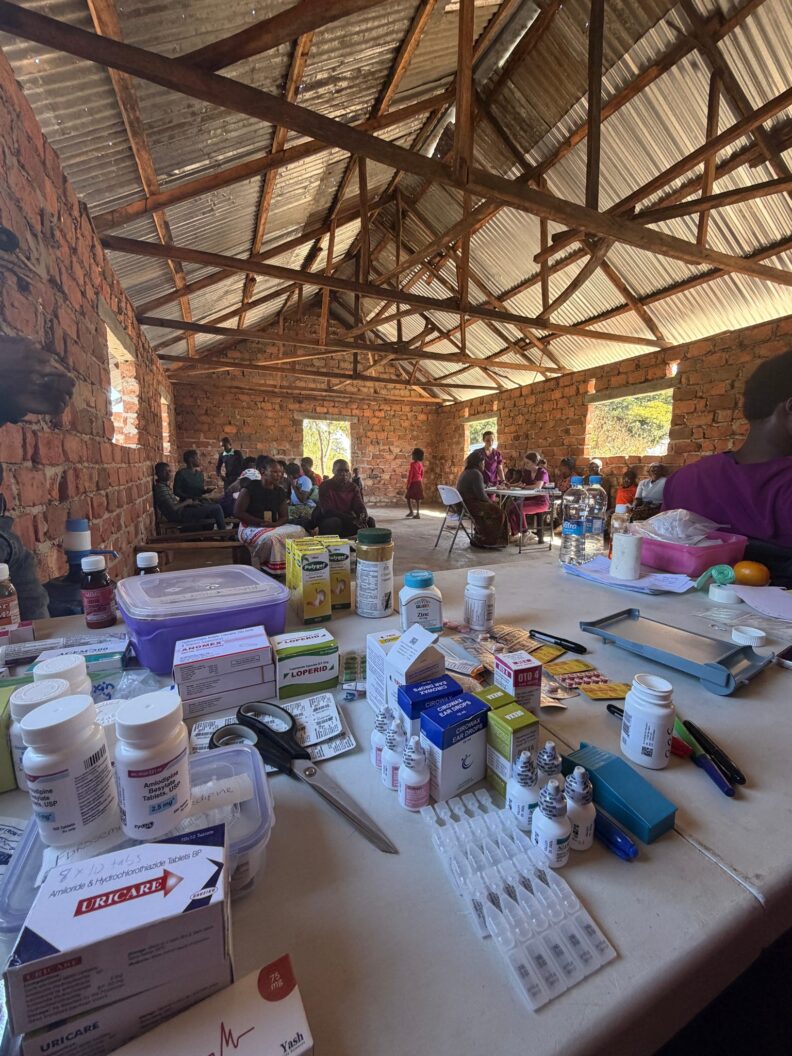
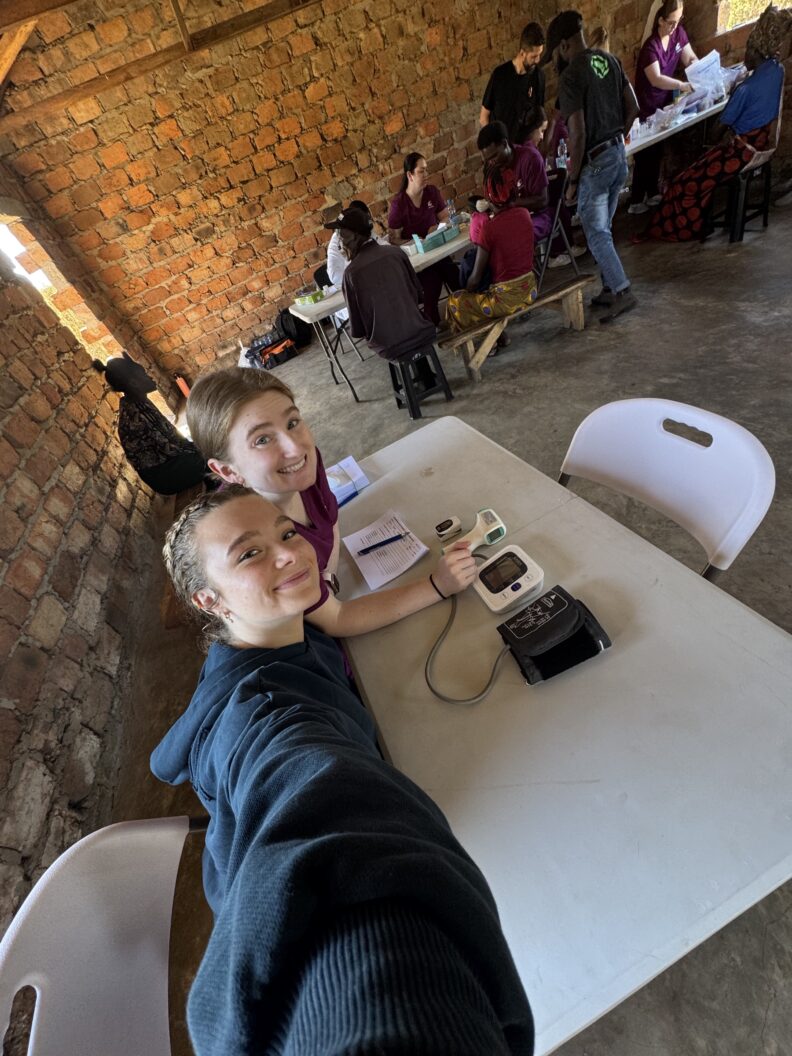
The clinic was housed in a little church with sheet-metal roofing, wide window gaps, and brick walls. It was simple, yet it soon developed into a place of trust, compassion, and connection. Using the materials we brought, we built three main stations. Greer and I worked at the first station, where patients were checked in and had their vital signs taken, setting the tone for the treatment they would receive. It was our first encounter with each patient.
Despite lengthy wait times and scarce resources, the most notable aspect of that time was how kind and patient everyone was. Many people were sitting peacefully on wooden benches; some were carrying children, while others were just patiently waiting their turn. The room had an uplifting and genuine sense of resiliency. Even small interactions (like a smile, a greeting, or a reassuring tone) felt meaningful. It served as a reminder that human connection, presence, and respect are just as important to health care as treatments and medications.
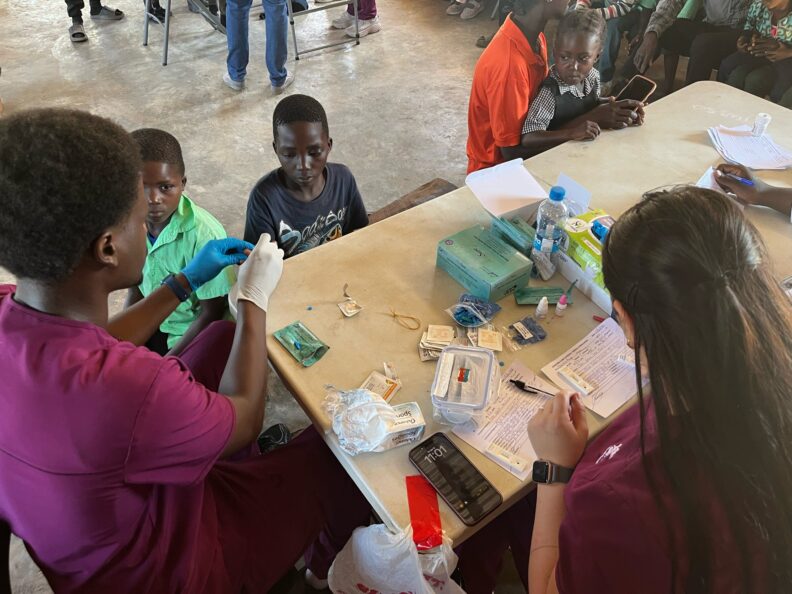
Patients then saw Dr. Peter, who evaluated their symptoms and determined a diagnosis. When necessary, Abby and Nasir conducted blood tests alongside him, which was particularly crucial for detecting malaria cases. Gracie, Kendra, and Ryley prepared and calculated medications at the last station according to the needs of each patient. In the meantime, despite the steady stream of patients, Mark, Patrick, and Rosana assisted wherever they were required to keep the clinic operating efficiently.
Despite the limited area and resources, the turnout was amazing. We treated about 60 patients in only four hours, ranging in age from a 3-month-old infant to an 83-year-old adult. We adjusted as we went, moving benches and adding seats to make room for more people. In addition to seeking treatment for current illnesses like malaria, colds, and coughs, many patients also came in the hopes of obtaining prescriptions for future use, which are difficult to come by on a daily basis.
This experience was eye-opening in ways that are difficult to fully capture. It highlighted how challenging it can be for people in rural areas to access even basic health care. At the same time, it showed the strength of these communities and the importance of even a single day of care. Being part of this effort reminded me why nursing matters, not just in hospitals or clinics, but wherever people are in need.