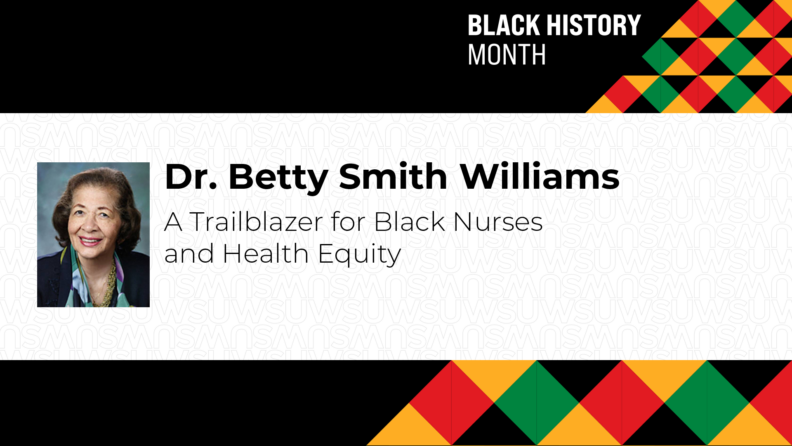
Dr. Betty Smith Williams (1929 – present) is a name that resonates deeply within the nursing community. As a founding member of the National Black Nurses Association (NBNA), she has spent her career advocating for greater representation, equity, and improved healthcare for Black communities. Her work has paved the way for countless Black nurses to thrive in the profession while advancing policies that address healthcare disparities.
Breaking Barriers in Nursing
Dr. Williams has been a pioneer throughout her career. She was the first Black master’s degree graduate of the Frances Payne Bolton School of Nursing (1954) and later became the first Black professor in a college or university in California (1956). At a time when racial discrimination limited opportunities for Black nurses, she refused to accept the status quo and instead worked to create opportunities for others.
Founding the National Black Nurses Association
In 1971, Dr. Williams co-founded the National Black Nurses Association (NBNA), an organization dedicated to supporting and empowering Black nurses. The NBNA has become a vital force in nursing, providing mentorship, networking, and leadership opportunities for Black nurses while advocating for healthcare equity and social justice.
A Lifelong Commitment to Health Equity
Throughout her career, Dr. Williams has focused on improving healthcare outcomes for African American communities. She has been a strong advocate for culturally competent care and has worked to eliminate racial disparities in healthcare. Her efforts have shaped policies that prioritize equitable treatment and access to quality healthcare.
A Lasting Legacy
Dr. Betty Smith Williams’ work has had a profound and lasting impact on the nursing profession. By breaking racial barriers, founding a national organization, and advocating for healthcare equity, she has ensured that future generations of Black nurses have the support and representation needed to succeed.
Throughout history, Black nurses have played a vital role in advancing healthcare, advocating for equity, and shaping the future of the profession. Their contributions to education, research, policy, and patient care have broken barriers and inspired change. This Black History Month, we recognize the impact of these trailblazers and their ongoing influence in creating a more inclusive and equitable healthcare system. Read more about their stories