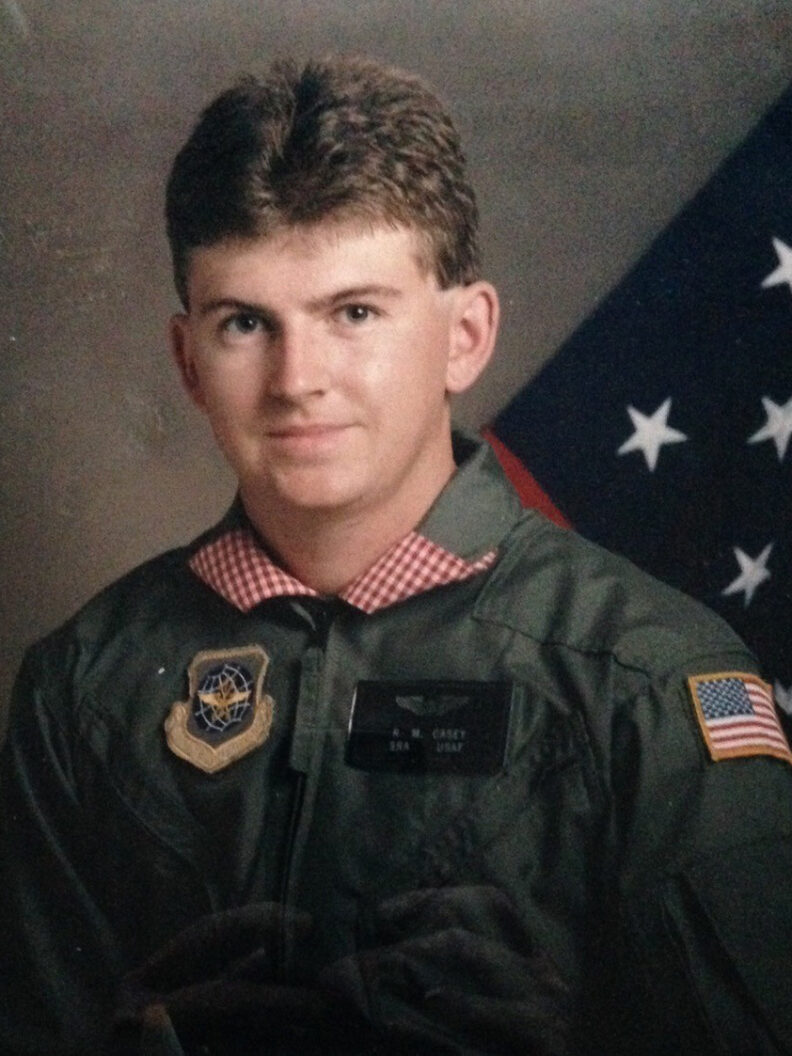

Roger Casey served five years as a U.S. Air Force medic, including emergency department work and aeromedical evacuation aboard C-130 aircraft. He credits his service with strengthening his discipline, problem-solving and commitment to teamwork. A registered nurse since 1991, he now serves as an acute care RN and lead nurse at Kadlec Regional Medical Center’s freestanding emergency department in Kennewick, Washington.
When Roger Casey recalls caring for a burn patient aboard a flight from Panama to San Antonio, he remembers the team it took to get that person to a burn center.
As an aeromedical evacuation technician in the U.S. Air Force, Casey learned that caring for someone depended on everyone doing their part. That lesson has stayed with him throughout a nursing career spent largely in emergency departments and related settings.
Today, Casey is an acute care registered nurse and lead nurse at Kadlec Regional Medical Center’s freestanding emergency department in Kennewick, Washington. This Veterans Day, he reflects on the military experiences and people who helped shape his approach to nursing, leadership and service.
Finding a path to service
Casey joined the Air Force with two goals: serving his country and finding a way to afford college.
He served for five years as an enlisted medic, first working in the emergency department at the base hospital at Malmstrom Air Force Base in Montana. Later, he served as an aeromedical evacuation technician flying aboard C-130 aircraft out of North Carolina. He held the rank of sergeant when he was honorably discharged.
Some of his most meaningful experiences came from caring for retired veterans at Malmstrom and getting to know them. Serving on the base Honor Guard also left an impression, giving him opportunities to meet dignitaries and participate in memorial services for fallen airmen.
Across those experiences, one lesson stood out: “you’re part of something bigger than you and the discipline to realize that.”
Bringing military lessons to nursing
A registered nurse since 1991, Casey credits his military service with helping him develop the discipline to focus on the task at hand while remaining open to different ways of solving problems.
The flight carrying the burn patient remains a lasting example of what coordinated care can accomplish. Moving that patient from Panama to a burn center in San Antonio required a team working toward a shared purpose.
That understanding continues to guide Casey as a nurse and leader.
“It is about your team and how you can accomplish your goals and objectives with the help of everyone on the team,” he said.
For Casey, leadership begins with recognizing that no one works alone. He sees a connection between the reliance on teammates in military service and the relationships that sustain health care teams: being there for the person beside you and knowing you can rely on one another.
Remembering the people who made a difference
Casey also carries lessons from people he served alongside.
Master Sgt. Ken Shuman encouraged him during his Air Force service, and the two stayed in touch over the years. Staff Sgt. Jimmy Childs reminded him to take care of himself. Sgt. Kurt Richter encouraged him not to take life too seriously.
Capt. Cora (Rothrock) Greene helped point him toward nursing, inspiring a career that has now spanned more than three decades.
For ROTC students considering their own futures, Casey emphasizes both the sacrifice of military service and the opportunity to contribute to something larger than themselves.
As in health care, he believes that experience begins with an attitude of serving others—and a willingness to support the people alongside you.