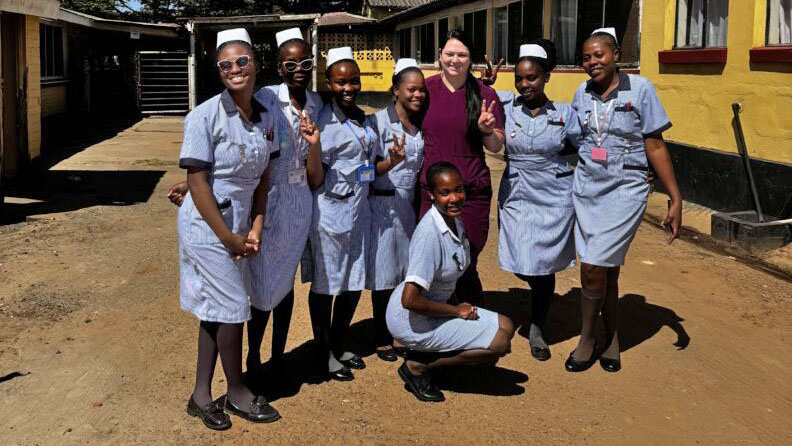
The morning started slowly as the days of previous clinical rotations and cultural experiences wore on us all. An early morning breakfast made by our amazing chef, Alex, prepared us for our clinical rotation, and we parted ways. Three of us got in the van and left for Roan Antelope General Hospital, two students went to Fisenge Village to shadow the nurses at the local clinic, and the final two students helped at Kafakumba Clinic.
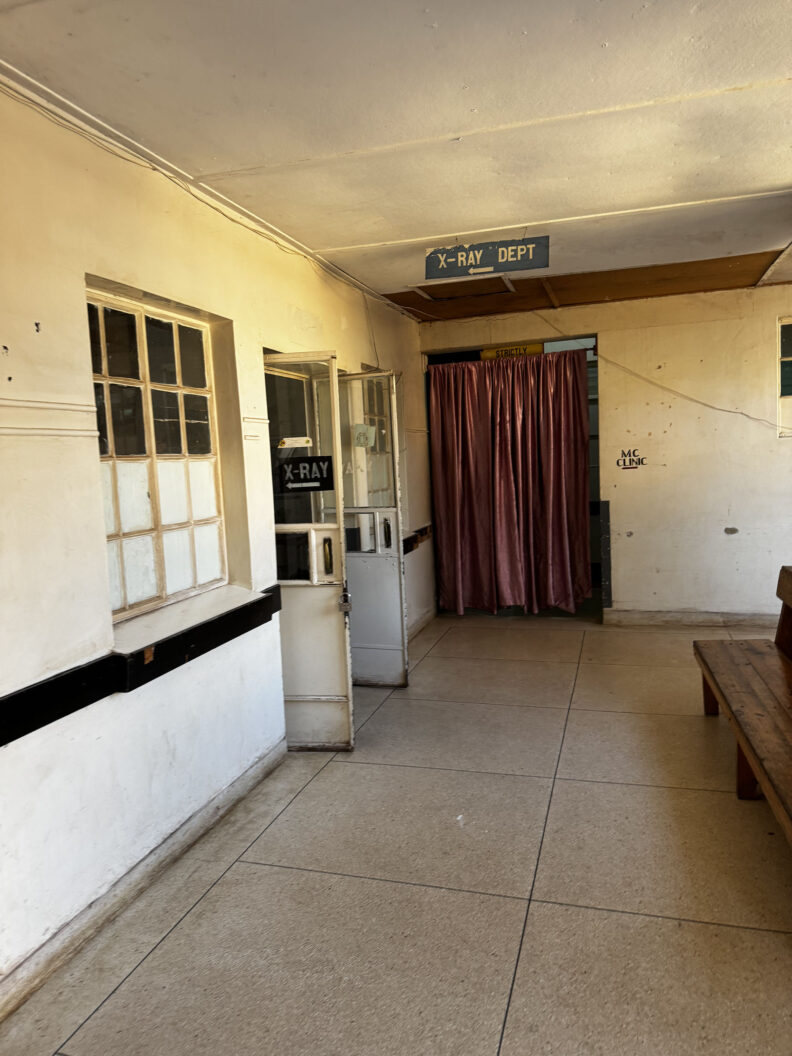
Once we arrived at the local hospital, our professor gave the three of us a miniature tour of the facility, showing us the primary units, or wards as they are called in Zambia. Greer chose to spend her day in the maternity ward, Eva started the day in the emergency room, and I went to the pediatric ward of the hospital. The first thing that I noticed when I walked into the clinic was all of the eyes on me. Curious eyes of patients, nursing students, and nurses all followed me as I was introduced to the head nurse for the ward. I was shown around the ward and introduced to the patients and their parents by nursing students Taonga and Theresa.
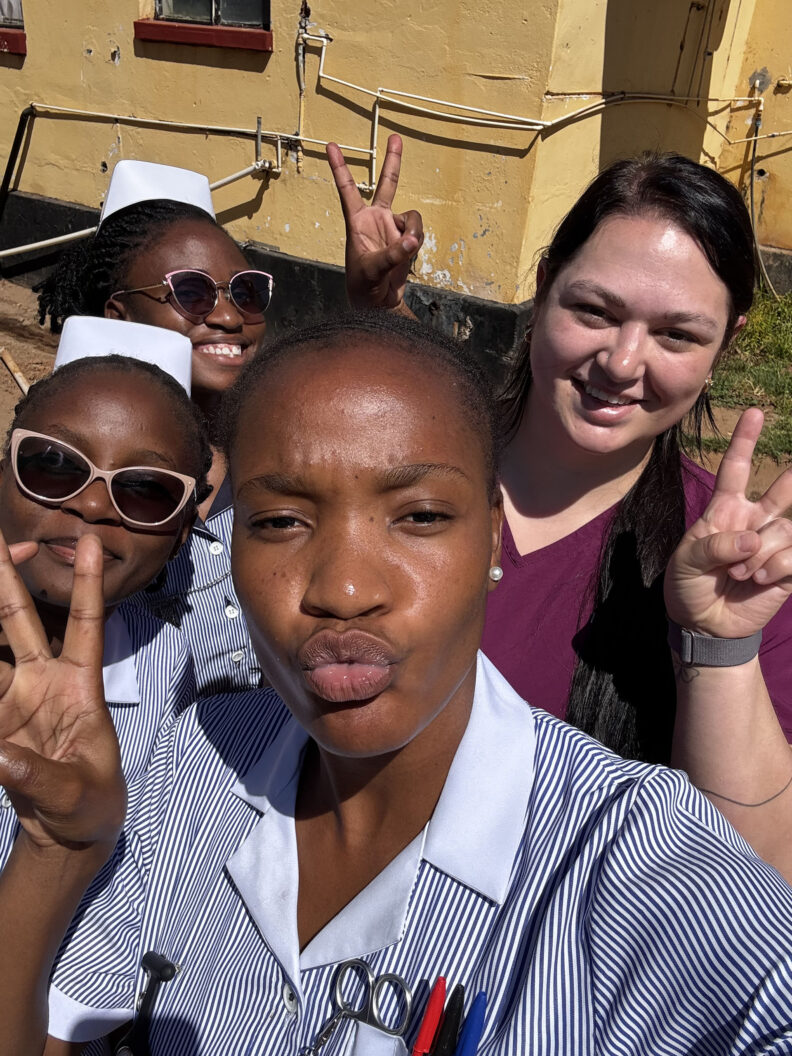
After they oriented me to the ward, we joined the other nursing students and the intern doctors on rounds, during which they discussed the patients and their plan for the day. This experience really made me realize how different rounds were in Zambia versus the United States. In the United States, doctors round on all their patients in maybe 30 minutes per unit, while in Zambia it took the doctors approximately three hours to see all their patients on the ward. This difference also highlighted a cultural difference in conversation. Americans are direct and straight to the point, whereas I have noticed through my interactions that Zambians always begin conversations by saying hello (either in English or Bemba) and asking how the person is. This is just one of the many differences that have made this cultural experience so deeply touching and educational.
After rounds were complete, we passed medication to the patients. This was a unique experience for me because their medication cart was a metal cabinet on wheels instead of a single room with a medication machine like hospitals in the States have. Since this was a pediatric ward, we gave the oral medication to the patient’s parent (usually the mother) who was sitting at the bedside and instructed her to give it to the child. This was difficult for me because many of the patients on the pediatric ward at Roan Antelope Hospital did not speak English and only spoke Bemba. The student nurse that I was passing medications with taught me a new word to help in instructing the parent to give the pill to the child. The word was “mupeele,” after which I would add the child’s name so that the parent would know I meant for them to give the medicine to their child. It was amazing seeing how appreciative the parents and the children were when I greeted them in Bemba or used small words and phrases. I also noticed that everyone was happy to teach me key words or phrases and giggled at my accent when I attempted to say them for the first time.
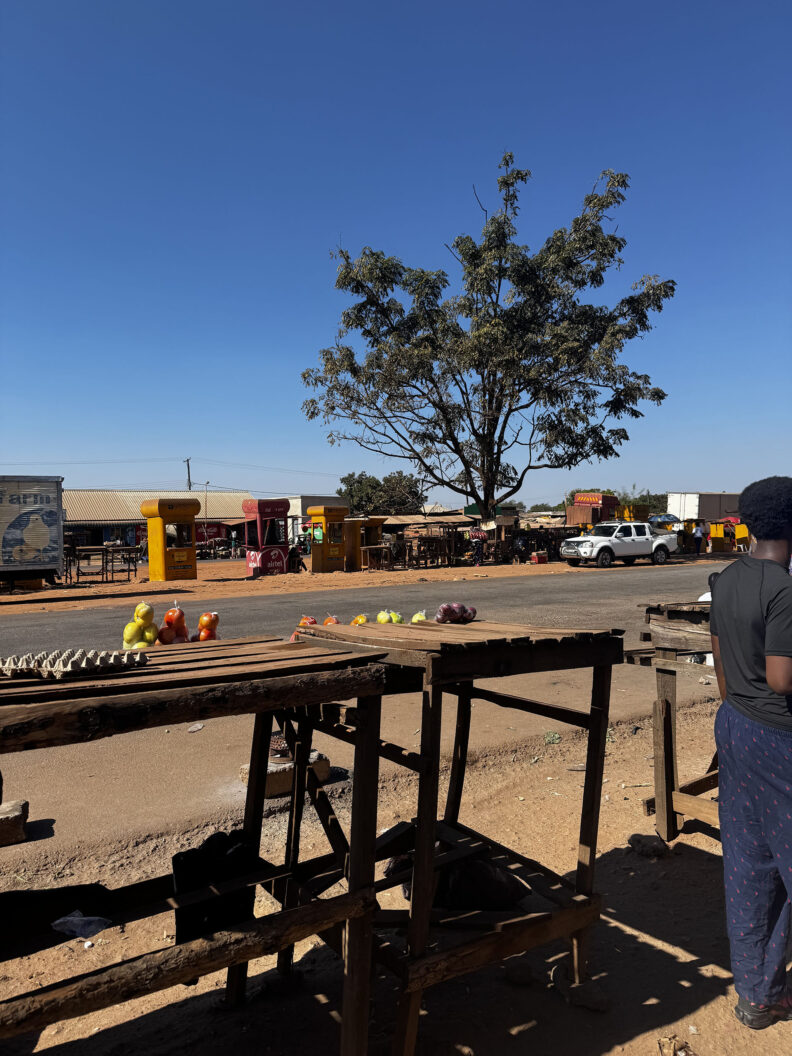
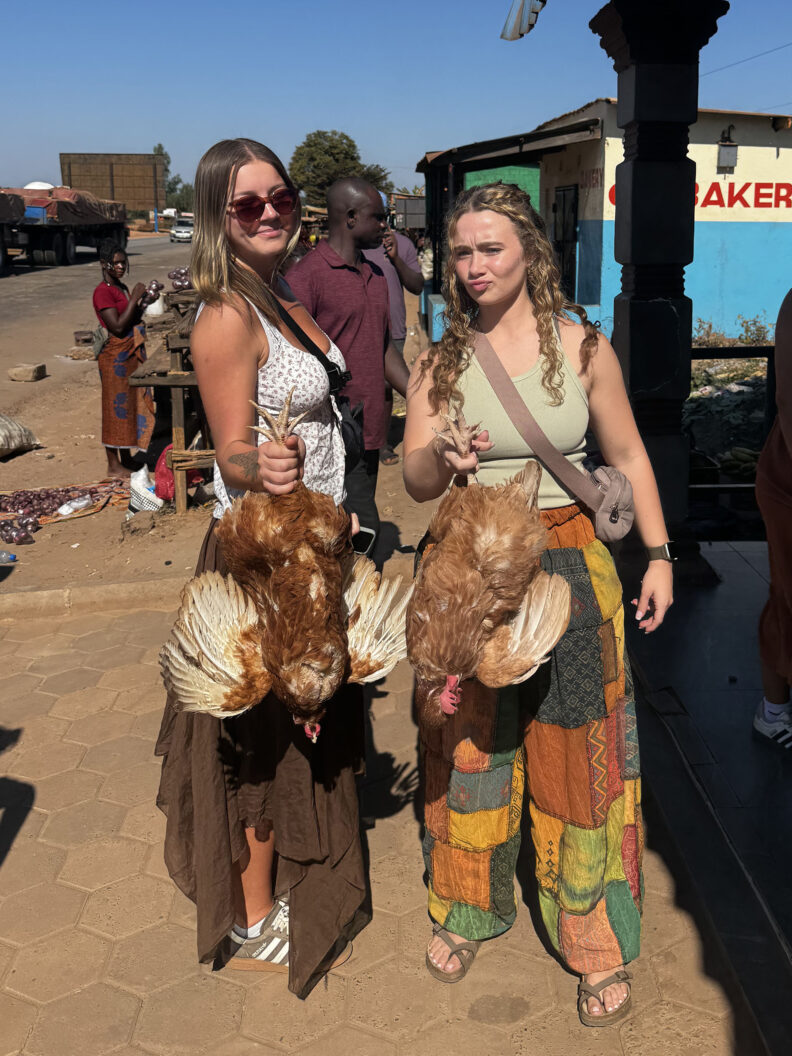
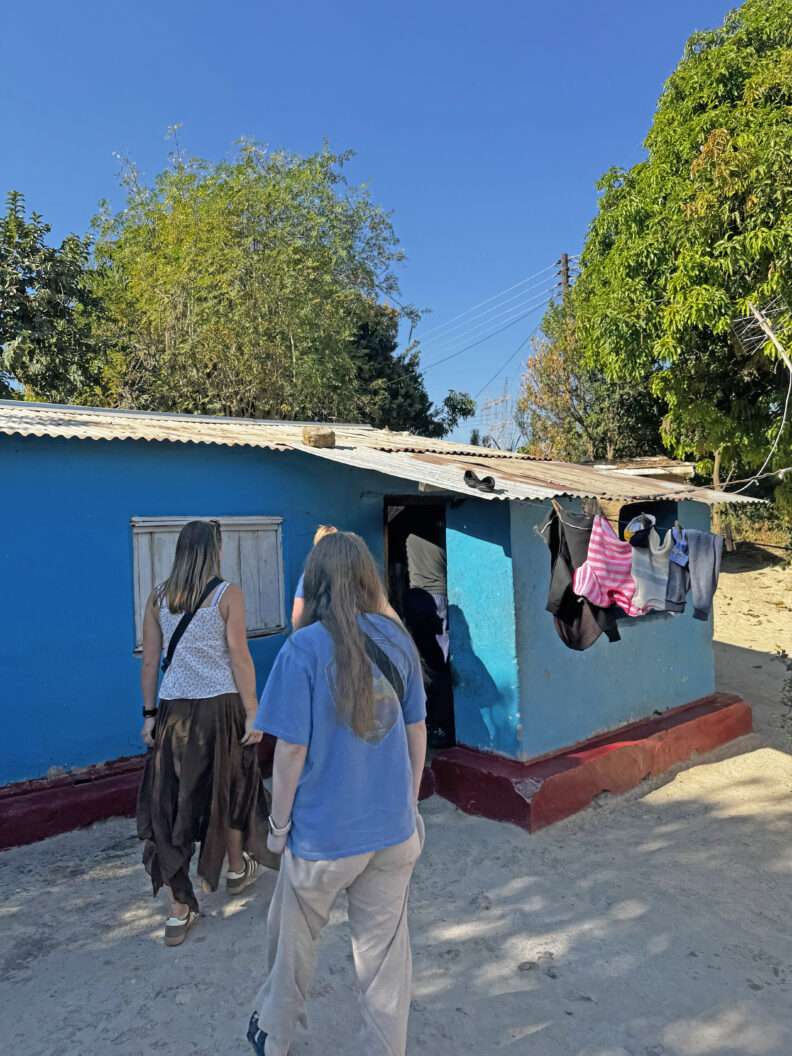
Later in the day, we were taken to Baluba Village to purchase food items in the market as well as what are called Chitenge. Chitenge are large pieces of beautiful fabric used for a variety of functions, including as a skirt, to hold children (of varying ages and sizes), and to carry goods bought at markets, as well as many other uses that I am unaware of. There was all manner of fresh food being sold at the roadside, including tomatoes, bananas, okra, cabbage, corn, and live chickens. We all bought food to gift to the Kafakumba workers who welcomed us into their homes so that we could see what the inside of Zambian homes looked like. They were very proud of their homes and happy to show them to us, just as we were excited and happy to see them.
Overall, today was a day filled with cultural education in both health care and the community that was full to the brim with value. I cannot wait to see what the coming days show us.