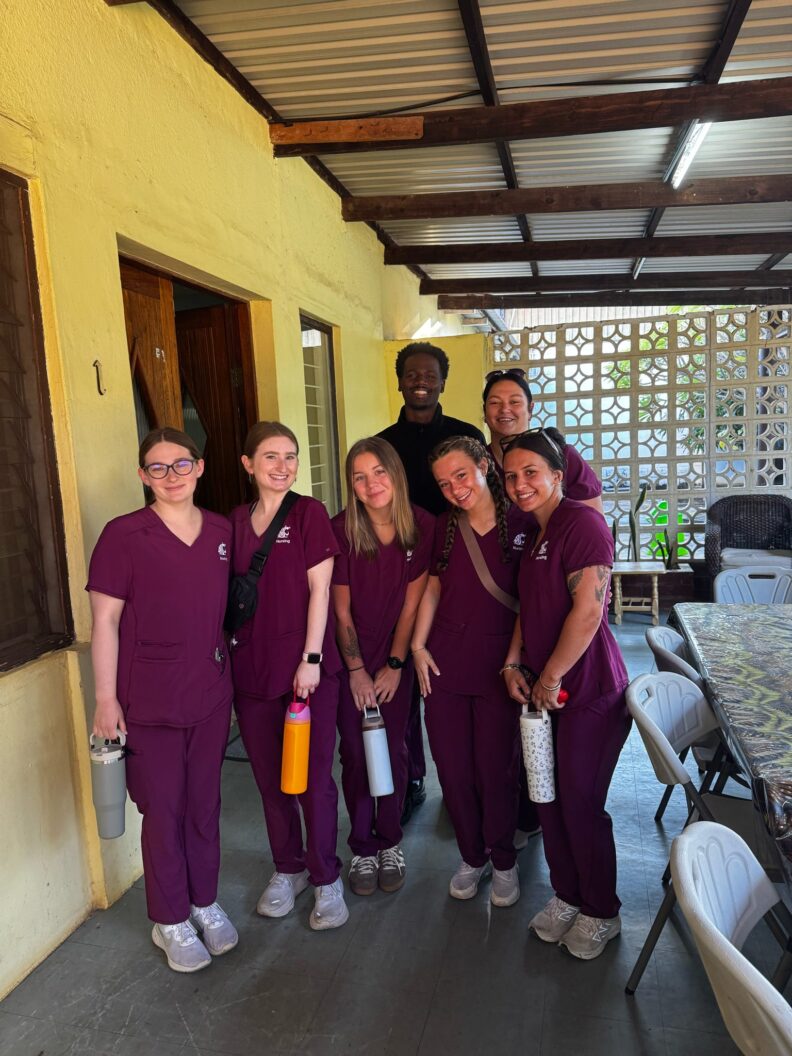
by Ryley Delima, BSN student
Today was our first official day experiencing the healthcare scene in Zambia, and it is difficult to put into words how impactful it was. Half of our group spent the day at Roan Antelope General Hospital in Luanshya, which is nearly a 20-minute drive from Kafakumba, where we are staying. As we travel along more of the roads every day, it has become clear how significant transportation barriers can be in Zambia. Most of the roads here are filled with potholes and are in very poor condition, making travel difficult and dangerous for all.
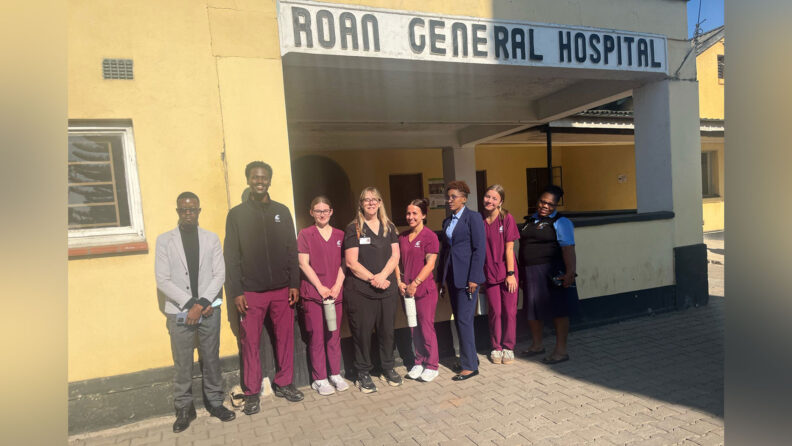
When we arrived at the hospital, we passed large groups of nursing students dressed in full uniforms. We learned that Roan is a teaching hospital and that it even has a nursing school. In Zambia, nursing students complete an extremely intensive three-year program that combines classroom learning, clinicals after full-time hospital shifts, and dormitory living, all of which are located on hospital property. They wear traditional nursing caps, with stripes that distinguish which year of school they are in.
To start the day, we were given a tour of the hospital by a very kind and knowledgeable midwife named Bornface, who works at Kafakumba Clinic. We visited the emergency department, pediatric ward, NICU, antenatal ward, labor and delivery, and medical-surgical wards separated by gender. Even the emergency department was extremely different from what I am used to seeing in America, consisting of a single small room with one bed.

Most of my time was spent between the NICU and maternity wards, which turned out to be one of the most eye-opening experiences of my life. The NICU consists of two large rooms with nearly 20 beds per room, without any privacy. This is where the mothers come to breastfeed their newborns, who are anywhere from one to four days old. The labor and delivery ward consisted of a room with four beds separated by curtains, each equipped for childbirth. In Zambia, a woman is expected to bring or buy everything for childbirth, including a gown, blankets, baby clothing, hygiene items, and even an umbilical cord clamp. This room was connected to a large antenatal, mother-baby area for the one to two weeks following birth or cesarean section, also with no privacy between patients.
As I walked into labor and delivery today, I witnessed a woman going into an emergency C-section due to concerns with the baby’s breathing. She was given only Tylenol for pain. In Zambian culture, mothers are expected to remain quiet during labor because expressing pain is believed to bring harm or bad luck to the baby. I was amazed by the strength of the women I observed.
The most memorable part of my day was after a baby was delivered. Once the umbilical cord was cut and the newborn was weighed, I was handed the baby and asked to dress them under a warming lamp. Holding that newborn was an experience I will never forget. The mother unfortunately began to hemorrhage and was sent to the ICU following the birth. What surprised me was that women here labor alone, as fathers are not allowed in the delivery room, and family members do not attend births. The baby is not given to the mother for skin-to-skin contact like they are in America.
Being in a hospital with such few resources and comparing it to American facilities was unfathomable. I observed little to no sanitation, and there were minimal sinks available throughout the hospital. It was not until the last decade that Roan Hospital had running water available. Before that, they used buckets of water to wash. Gloves were only used on rare occasions, and we had to bring our own pocket hand sanitizer, as none was available. All patient records were recorded in paper folders on the patient’s bed, which included documentation of medications, vitals, and assessments.
My time spent at Roan Hospital was absolutely unforgettable, and it took only one day to change my whole perspective on nursing and healthcare. It is easy to say I will never look at our resources and healthcare system in the same way again.
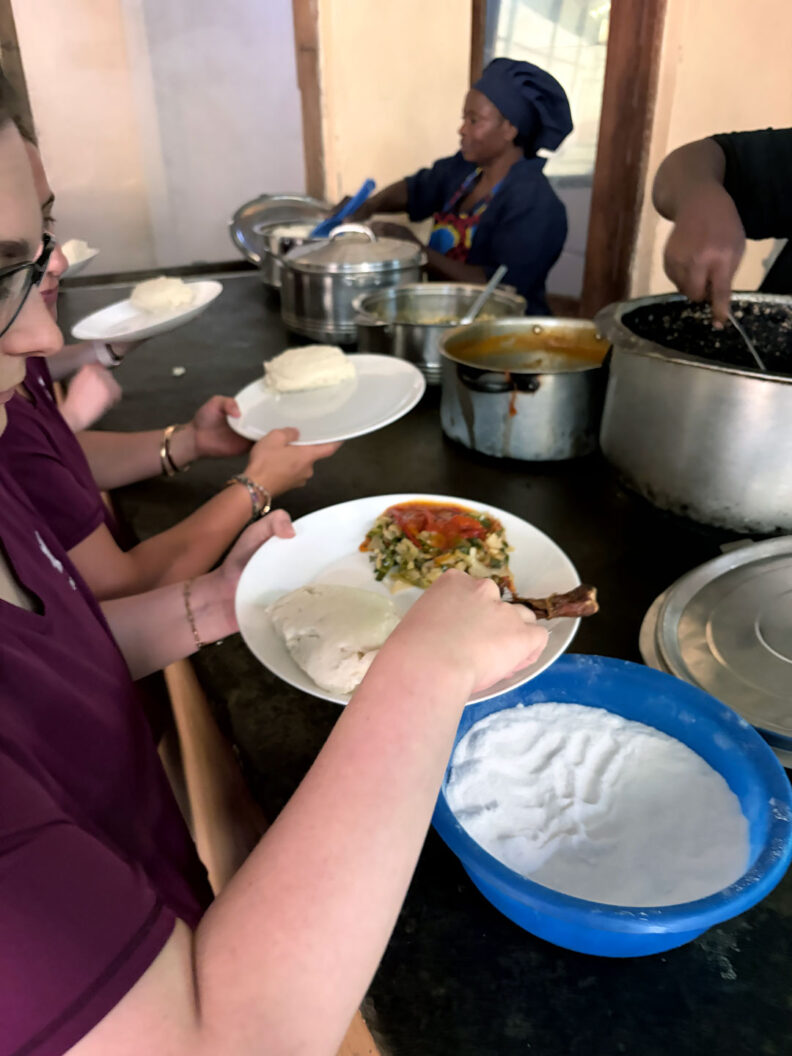
After our clinical day, we arrived back at Kafakumba in the afternoon and ate a traditional Zambian meal. We were served nshima, which is a porridge-like dish made of finely ground maize. This was served with a side of cabbage, chicken, salt, and soup. This meal was probably my favorite one yet. Zambians eat nshima with only their hands and no utensils, and joining them in this was a great cultural experience.