by Greer Bainbridge, BSN ’27
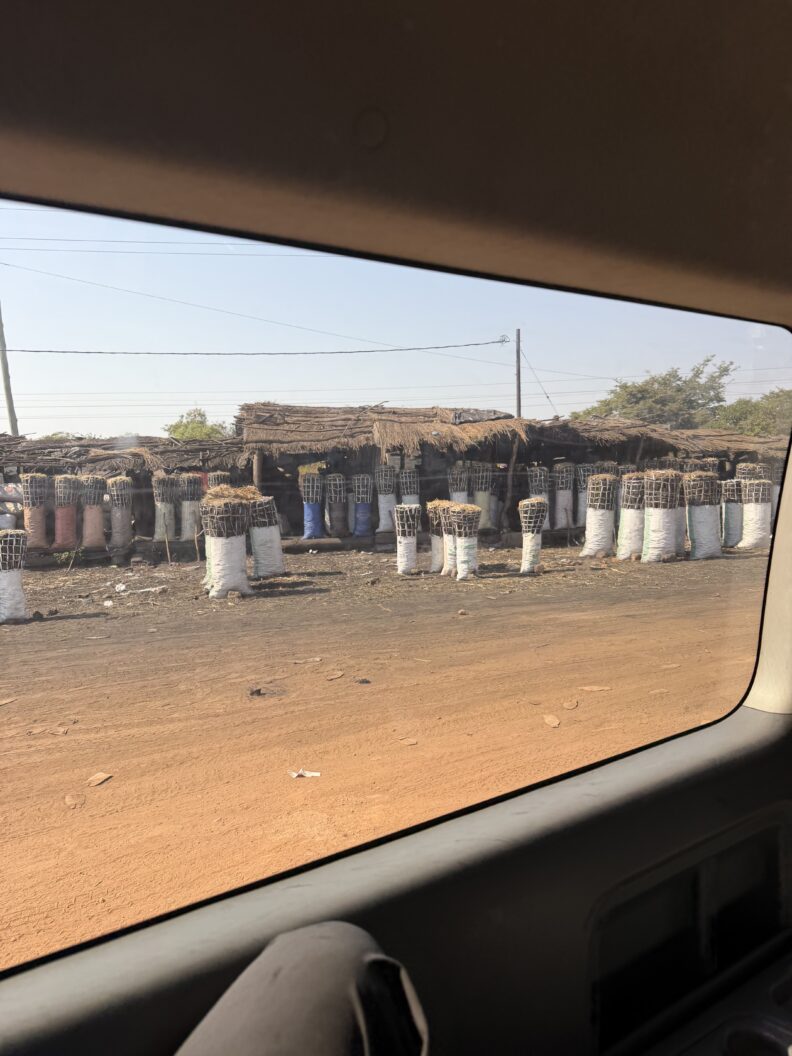
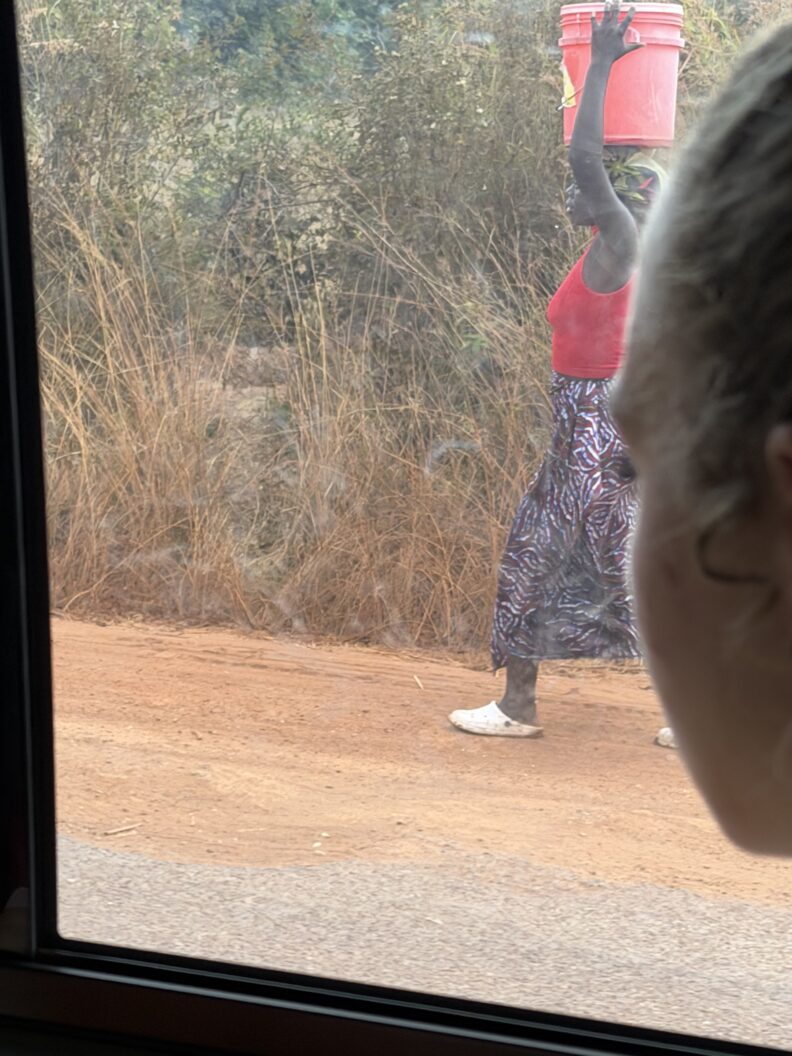
On our second day here in Zambia we got up at the Kafakumba Training Center (KTC) and drove two hours to the Nsobe game camp. Along the way we saw a variety of sites including small villages, people working on the roads, and others selling/roasting corn on the side of the road. Many mothers wore their babies on their back using a kitanga. A kitanga is an Africa fabric with many purposes. Some use them as skirts, to hold water on the top of their head, to hold their babies on their back, and more. As well, we saw a variety of schools and charcoal being used for cooking (pictured below).
When we first arrived at the game camp we noticed monkeys, which like to steal form visitors leaving items around. At one point we noticed them stealing someone’s bag of chips. There we had lunch which was pork chops, vegetables, mashed potatoes, rolls, and ice cream for dessert. The ice cream was so unlike ice cream in the states. It was fluffy, crisp, and rich in vanilla flavor. We then went to look at the animals in captivity which included a variety of venomous snakes, a harmless snake that I held along with others, a crocodile, and turtles.
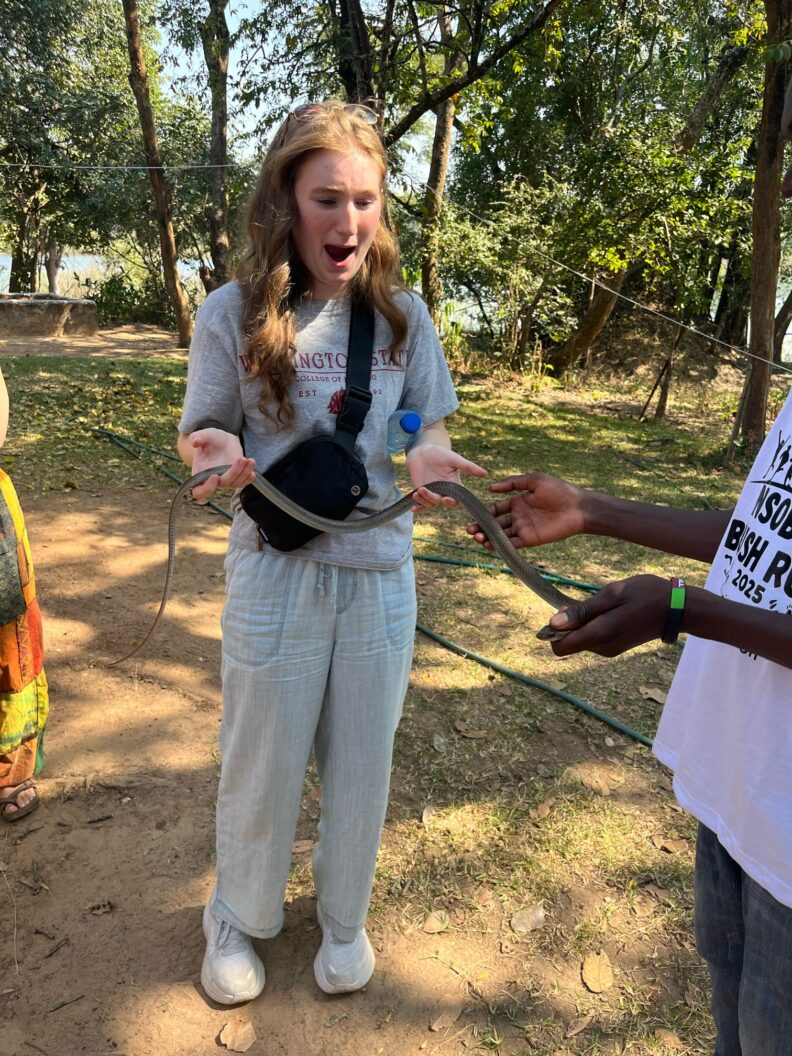
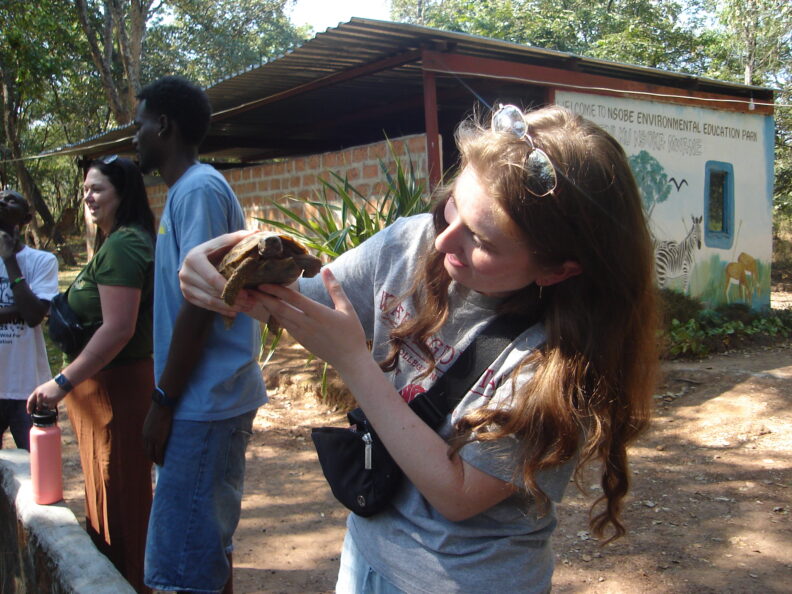
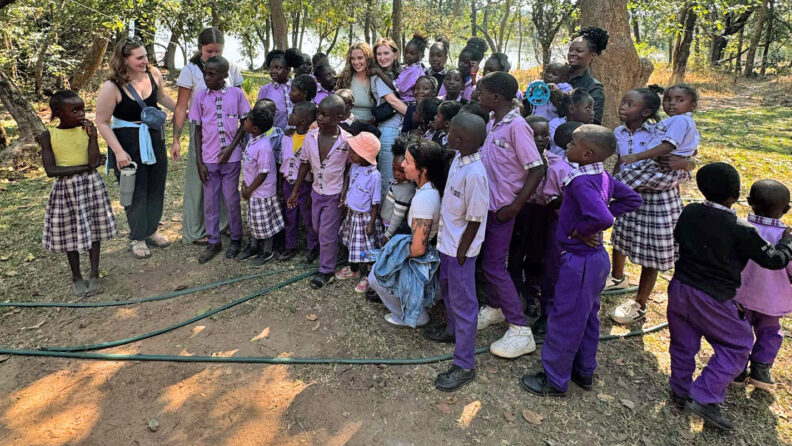
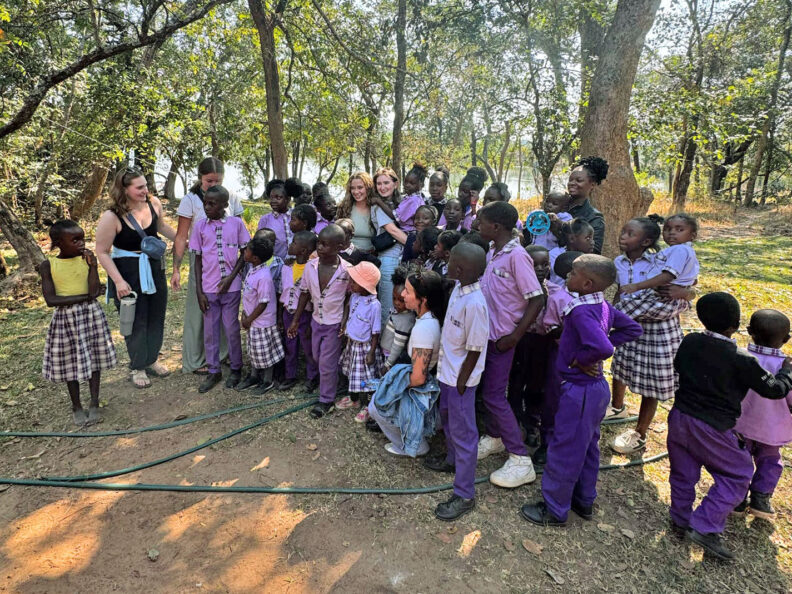
The venomous snakes are so venomous that one of which has no anti-venom and will kill you in up to 30 days. If bitten by the other venomous snakes one has to get an amputation to save the person. The crocodile was very scary with had a low growl and fast reflexes. The turtles were fun to hold and they even tried to swim away while we held them up. After seeing the animals many of us played with some of the Zambian kids there on a field trip. We learned how to dance from the games they play as a group and how to say some words in their native language, Bemba. “Hello” in Bemba is “Mulishani”.
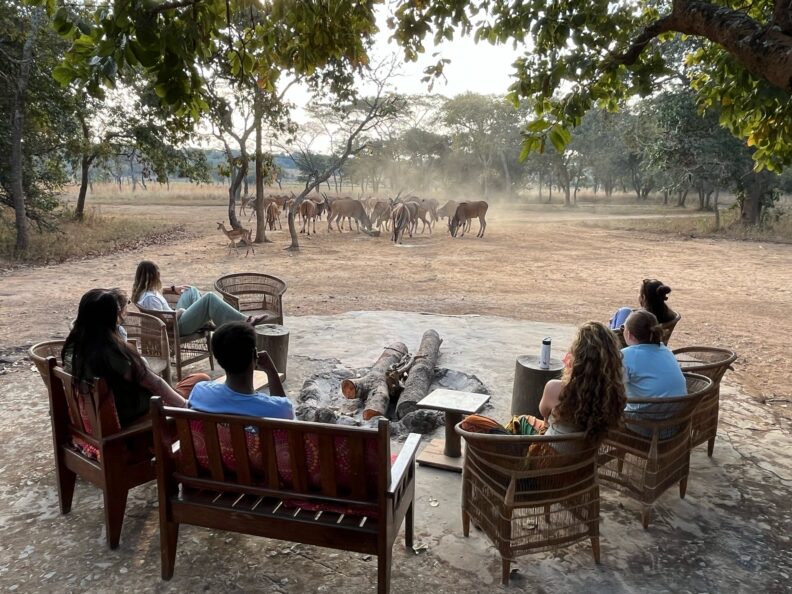
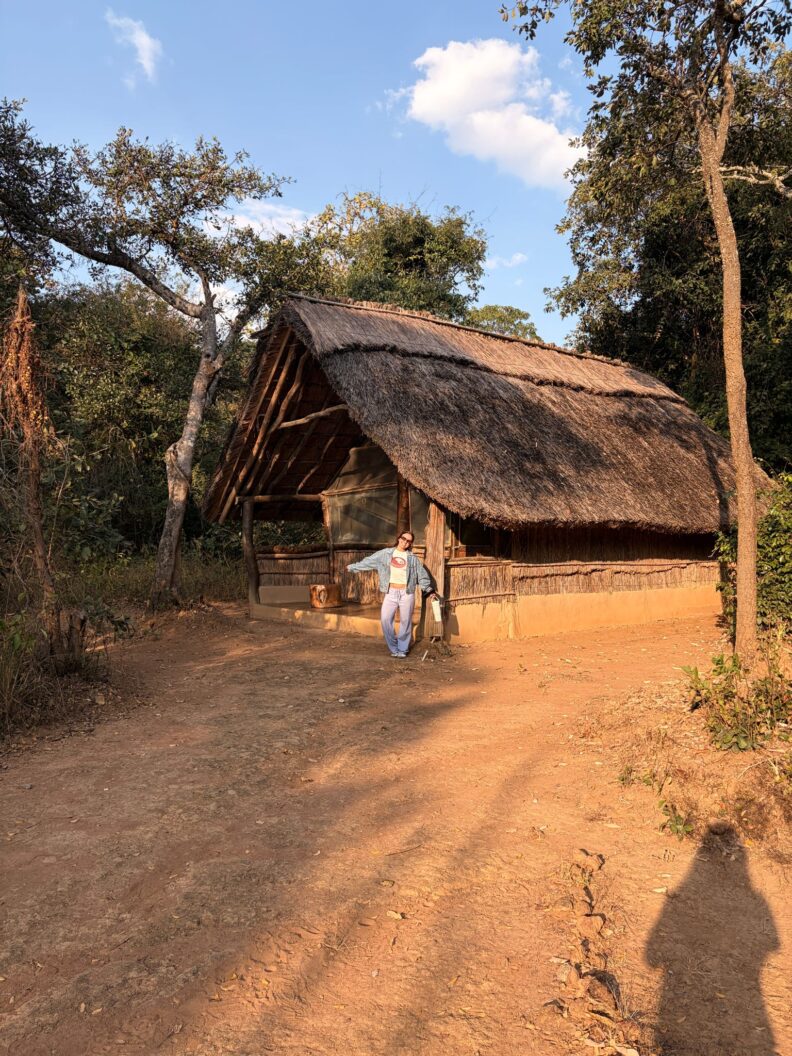
After all the excitement seeing the animals and playing with some of the kids we then went to our sleeping area to see the animals get fed. The worker brought out maize, the feed for the animals, and poured different piles for the animals to eat from. The first animals that came up to the area were Kudu, a type of antelope. They ate most of the food and stayed around for a long time wanting more. We also saw giraffes, zebras, and warthogs. The site where we slept was beautiful with outdoor bathrooms in each cabin/hut, a fireplace in the center of the area, and a common space to eat. At night, we played many games around the fire including imposter and mafia. In the morning we had an English breakfast and left for Lake Kashiba.
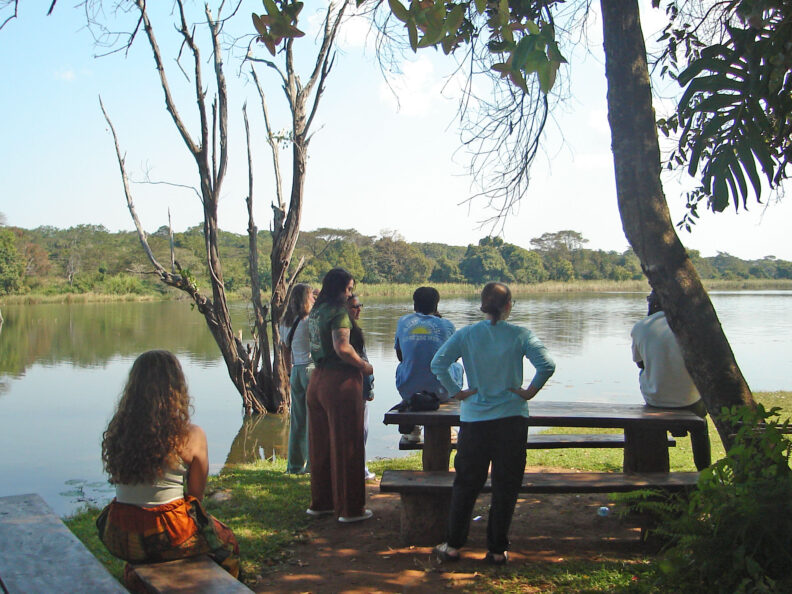
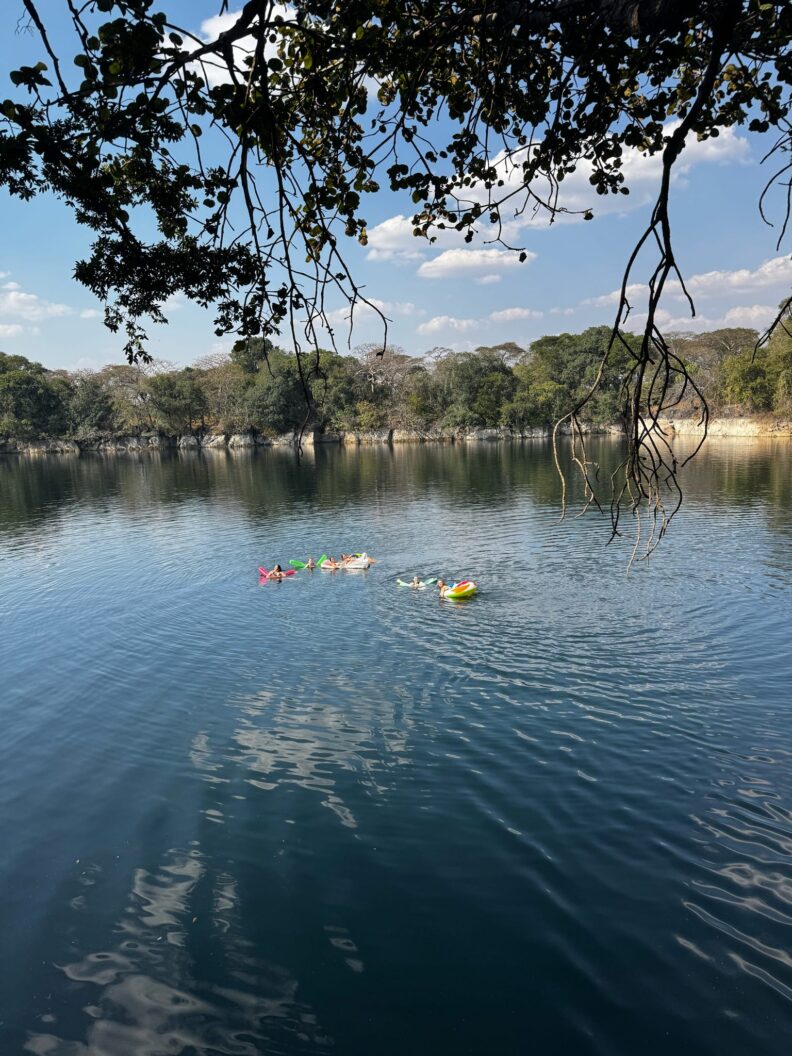
The drive to Lake Kashiba was supposed to be an 1-1/2 hours, however, due to the roads in Zambia the drive ended up being close to 3 hours. On the drive we passed by many villages, street markets, banana trees, and a toll area. The roads on the drive to the lake were rundown and full of potholes. At one point we passed children trying to fill the potholes with dirt. The mix of the bumpy roads, the driver trying to swerve around the potholes, the passing of cars, and hot car made many people car sick. Once to the lake we blew up floaties, jumped off the rocks, and swam in the warm water. Some of us even used a rope to swing to jump into the water. The water was warm and relaxing after the long car ride. After about 3 hours we packed up and went back to KTC. The drive was not as bumpy or long on the way back and we saw different villages. Once back at KTC we had our dinner and went to bed after a long day of driving and swimming.
Overall, the WSU students got to see a variety of sites while driving to the game camp and lake. It was an educational weekend seeing the variety of living areas, food markets, road conditions, and ways of life.
About the Zambia Study Abroad Program
The Zambia Study Abroad Program gives Washington State University College of Nursing students the opportunity to explore health care delivery, public health, culture, and community life in a global setting. Led by faculty from the College of Nursing, students engage with local health care providers, community organizations, schools, and residents while learning about the challenges and strengths of health care systems in Zambia. Through clinical observations, cultural immersion, service-learning activities, and reflection, students gain a broader understanding of global health and the role nurses play in improving health outcomes across diverse communities.
Learn more and follow additional trip updates: