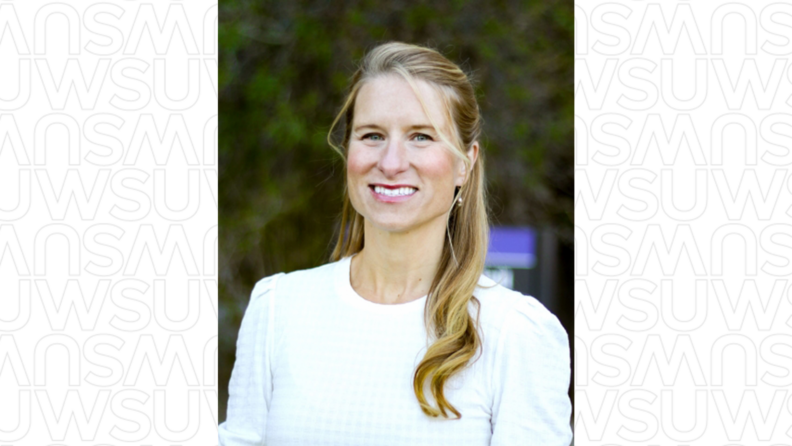
Kate Ann Pieper did not return to school because it felt easy. She returned because she knew it mattered.
A first-generation college graduate, Pieper earned her associate degree while working full time. Early on, she understood that advancing in nursing meant earning a BSN. When she chose Washington State University, the decision was intentional. She wanted a degree that challenged her thinking and prepared her for leadership, not just a credential to check a box.
Choosing the RN–BSN Path
Pieper entered the RN–BSN program carrying real doubt. Confidence was her biggest hurdle. She questioned whether she belonged at a large research university and whether returning to school made sense when she was already a practicing nurse. Imposter syndrome lingered, shaped by past experiences and others’ expectations.
That mindset shifted as the program unfolded. Coursework in leadership, community health, and pathophysiology reshaped how she understood nursing beyond bedside care. Discussion-based learning pushed her to slow down and think more deeply.
When asked what makes a good nurse, Pieper replied “there isn’t one right answer,” Pieper recalls. “That question alone changed how I thought about my role and how I showed up at work.”
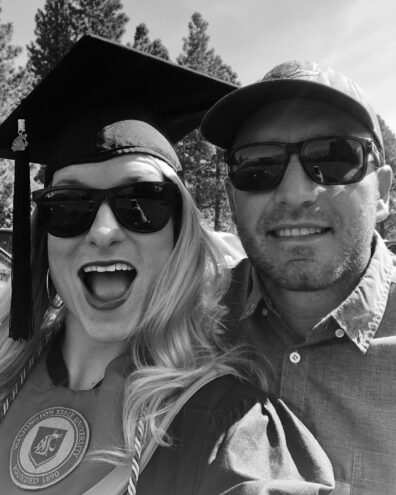
By graduation in 2018, she had not only completed the program but earned a 3.8 GPA.
School, Grief, and Grit
Life did not slow down while Pieper was enrolled in the RN–BSN program. Just before beginning her prerequisites, she lost her father unexpectedly. Her marriage was unraveling. She also stepped out of a union role into a demanding management position with little flexibility. School became both structure and refuge. When she could not be present emotionally at work, she could still show up for her coursework.
One decision tested everything. A supervisor refused to honor previously approved time off for a public health experience tied to her degree. Pieper went anyway, absorbing the financial cost.
“That moment taught me how much growth happens when things don’t go your way.”
Kate Pieper, RN-BSN ‘18
When she came closest to walking away from the program, it was Mary Gonzalez, Undergraduate Campus Advisor in Yakima and Community Engagement Council Advocate at the WSU College of Nursing, who helped her stay on track. That steady encouragement reminded Pieper to finish what she started.
What the RN–BSN Changed
Completing the RN–BSN transformed how Pieper practiced and led. The program gave her a systems-level view of health care, along with the communication skills to navigate it. As a nurse manager, she learned how to step back, assess context, and respond with clarity rather than urgency.
“My confidence went through the roof,” she says. “Understanding the why behind decisions made me a better nurse and a better leader.”
The degree opened doors to leadership roles in Magnet hospitals and qualified her for graduate education. More importantly, it showed her that learning did not have to stop.
From Student to Educator
Today, Pieper is an assistant professor at Carroll College in Helena, Montana. She teaches leadership and management across traditional and accelerated nursing tracks, drawing heavily from her own experiences as a student and clinician.
Her work includes launching a formal mentorship program pairing senior nursing students with sophomores, developing a for-credit resiliency course grounded in positive psychology, and coordinating Montana’s largest interprofessional mock mass casualty simulation.
“Nurses are experts at walking into a room and reading it,” she says. “That skill isn’t taught directly, but it can be strengthened. Mentorship helps students realize how much they already know.”
Still a Coug
After earning her master’s degree in nursing leadership and management from Aspen University, Pieper returned to Washington State University to pursue her PhD in Nursing. Her research focuses on integrating resiliency education into undergraduate programs to improve retention and long-term job satisfaction.
She applied to one doctoral program.
WSU.
Her long-term goal is to develop a resiliency book and program that other undergraduate nursing programs will utilize to reduce burnout in the nursing profession as a whole.
Advice for RNs Considering the Next Step
Pieper’s advice is direct. Get organized. Put everything on paper. Take things one day at a time.
Question whether your doubts are real or perceived.
If you made it through an associate degree, you are smart enough to finish a BSN,” she says. You have to want it for yourself.
Kate Pieper, RN-BSN ‘18
