
Pain Management to Support Integrative, Person-Centered Care
Overview
Welcome to the WSU College of Nursing’s monthly webinar series on Pain Management to Support Integrative, Person-Centered Care. This continuing education series features subject matter experts who will share the latest insights and approaches in pain management. Designed for healthcare professionals, these webinars offer valuable strategies to enhance patient care through integrative, holistic methods that focus on the individual’s needs.
Join us each month to stay updated on the latest research, best practices, and innovations in pain management, while earning continuing education credits to advance your professional development.
Continuing Education (CE) Opportunities
The following includes a series of livestreamed webinars and on-demand online courses to meet the need for current pain management education that focuses on integrative evidence-based approaches and risk reduction for person-centered care. Both pharmacologic and non-pharmacologic approaches will be highlighted with experts representing a variety of health and therapeutic professions.
For questions, please contact nursing.painrelief@wsu.edu.

From Stress to Strength: Yoga as a Complementary Healthcare Strategy
This CE-accredited, asynchronous webinar explores yoga as a complementary approach to health and healing. Participants will gain an understanding of the physiological mechanisms of yoga, its ultimate purpose, and three key benefits it offers for well-being.
Presented by: Pamela de Gravelles, PhD, RN, CHSE
Associate Professor of Nursing
University of Arkansas for Medical Sciences

Evidence of Binaural Beats in Pain Management: Take a Look at What They Heard
The use of binaural beat practices and therapies have been employed by many individuals to promote well-being, to enhance focus for work and study, and also to help address a range of distressing symptoms, such as sleep disturbances, anxiety and chronic pain. Unfortunately, the science of binaural beat interventions is seldom discussed. In this presentation we will review the processes by which binaural beats are proposed to exert their impact as represented in current scientific literature and consider the application of binaural beats in select clinical settings, with a focus on chronic pain.
Presented by: Holly Watson, PhD, ANP-BC
Healthcare provider, researcher, and consultant with a focus on pain psychoeducation and self-care management.
Consultant/Owner, Critical Encounters PLLC
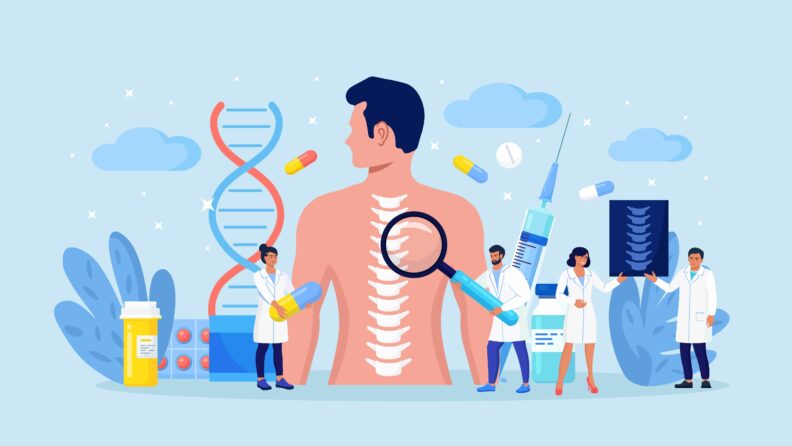
Interventional Pain Options for Spine Pain
This lecture will provide an in-depth overview of interventional pain management options for healthcare professionals, focusing on evidence-based techniques to address chronic pain. We will explore the role of epidural steroid injections (ESIs) in managing radicular pain, the effectiveness of radiofrequency ablation (RFA) for facet-mediated pain, and the expanding indications for spinal cord stimulators (SCS) in neuropathic and refractory pain conditions. Additionally, we will discuss the emerging field of regenerative medicine, including the use of autologous biologics such as platelet-rich plasma (PRP) and mesenchymal stem cells, as potential alternatives to traditional interventions. The lecture will emphasize patient selection, clinical outcomes, and the integration of these modalities into a comprehensive, multimodal pain management strategy. Attendees will gain practical insights into optimizing treatment plans, improving patient outcomes, and navigating the evolving landscape of interventional pain medicine.
This continuing education (CE) event will be offered asynchronously beginning on April 29, 2025.

Pain Management, Opioid Use, and Complications Among Older Adults
Opioid use in older adults is a significant problem, with an estimated 1 million seniors having opioid use disorder. Age-related changes increase the risk of complications like respiratory depression, falls, Cardiac conduction impairment and cognitive impairment. Effective management involves careful patient selection, low-dose prescribing, regular monitoring, multimodal pain management, and addressing specific side effects like constipation. Alternative therapies and, when needed, treatment for opioid use disorder is crucial. Education for patients and caregivers is essential for safe opioid use and overdose prevention.
This continuing education (CE) event will be offered asynchronously beginning on March 28, 2025.
Desired and Undesired Effects of Opioids: Morphine in the Brain
This session explores the complex effects of morphine on the brain and body. Following an introduction to the therapeutic and adverse effects of morphine, including its role in pain management and risks associated with its use, the mechanisms behind tolerance, dependence, and opioid-induced hyperalgesia will be examined to reveal how prolonged use alters brain chemistry. Learners will be able to recognize the key signs of opioid overdose and understand the appropriate use of antidotal therapy for effective intervention.
This continuing education (CE) event will be offered asynchronously beginning on March 5, 2025.

Pharmacology Basics for Opioids: Pharmacokinetics and Pharmacodynamics of Morphine
This session examines one of the most widely recognized opioids: morphine. Specifically, this talk will review the origins and historical significance of morphine and opium, providing a context for their use in medicine.
This continuing education (CE) event will be offered asynchronously beginning on January 15, 2025.
Targeted Therapies using Behavioral Medicine
An update on innovative, evidence-based behavioral medicine treatments for chronic pain.
This continuing education (CE) event will be offered asynchronously beginning on December 18, 2024.

Buprenorphine: Clinical tips for prescribing for chronic pain and/or Opioid Use Disorder (Recorded Session)
Buprenorphine is a safe and effective medication for treatment of both opioid use disorder and chronic pain. We will consider its history, FDA – approved products, and some principles for clinical use.
Originally presented live on November 13, 2024.

Consequences of Trauma: Pain and Post-Traumatic Stress Disorder (Recorded Session)
This recording, presented by Dr. Sheila Rauch from Emory University School of Medicine, will focus on describing how these issues present together and how they may impact treatment and long-term outcomes.
Originally presented live on October 23, 2024.
Continuing Education Statement
Accreditation

The Washington State University Elson S. Floyd College of Medicine is accredited by the Accreditation Council for Continuing Medical Education (ACCME) to provide continuing medical education for physicians.
![[logo] Accreditation Council for Pharmacy Education](https://wpcdn.web.wsu.edu/wp-nursing/uploads/sites/3014/2025/03/ACPE-Logo.png)
The Washington State University Elson S. Floyd College of Medicine designates this Live Activity for a maximum of 1.0 AMA PRA Category 1 Credit™. Physicians should claim only the credit commensurate with the extent of their participation in the activity.
The Washington State University College of Pharmacy and Pharmaceutical Sciences is accredited by the Accreditation Council for Pharmacy Education as a provider of continuing pharmacy education.
Pharmacy continuing education credits (1.0 contact hour, knowledge-based, ACPE Activity Number: UAN 0071-9999-24-020-L08-P) are available for this activity.
This nursing continuing professional development activity was approved by Montana Nurses Association, an accredited approver with distinction by the American Nurses Credentialing Center’s Commission on Accreditation. This activity is approved for 1.0 contact hours.
The RELIEF project (Resources and Education Leading to Improved Pain Care Equity For Washingtonians) is funded by a grant from the Washington State Health Care Authority. Project director Marian Wilson PhD, MPH, RN, PMGT-BC marian.wilson@wsu.edu
