- Impact Report Introduction
- Letter from Dean Mason
- Facts and figures
- Preparing nurses. Statewide impact.
- Employee spotlights
- Community impact
- Healthy people + healthy pets
- Giving that changes lives
- A Lasting WIN & Smart Giving From Your IRA
- Partnerships that transform care
- WSU nursing students gain global health perspective in Zambia
- First-generation student spotlight: Called to care
- Alumni spotlights
- Building confidence through practice
- Empowered Coug nurses
- Lighting up the sky for National Nurses Week in 2026
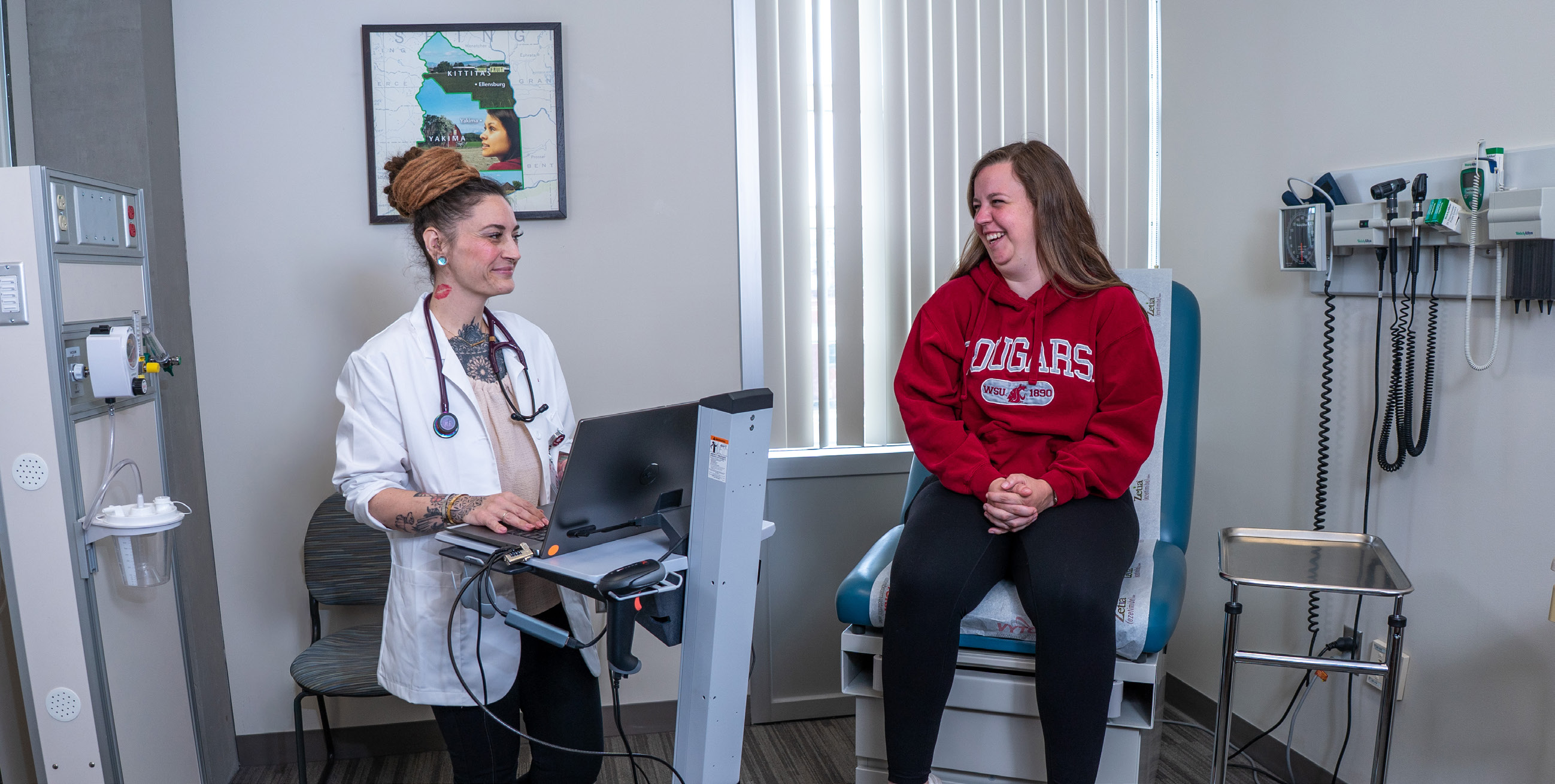
In the WSU College of Nursing simulation lab, students practice assessment, procedures and clinical decision-making. Standardized patients help them practice something just as important: how care feels to the person receiving it.
Unlike a manikin, a standardized patient can ask questions, express fear, refuse care or give feedback about whether a student’s words, tone and body language helped them feel heard and respected.
“The manikin cannot ask questions, express fear or even refuse care,” said Theresa Bowden, DNP, MSNEd, RN, associate teaching professor. “Those are all important aspects of nursing care the students can adapt to in real time.”
Michelle Lundy, lead standardized patient for the college, said the work helps students move beyond a checklist and learn to build trust.
Additional funding would help expand standardized patient experiences and Objective Structured Clinical Examination (OSCE) scenarios across nursing programs, including medical-surgical, obstetrics, pediatrics, community health, mental health, and nurse practitioner education.
“Your gift helps prepare students to communicate with compassion, think critically under pressure, navigate difficult conversations, and build trust with patients and families,” Lundy said.
Michelle Lundy, lead standardized patient for the WSU College of Nursing
Standardized patients fill a paid role within the simulation program. A gift to the standardized patient fund helps recruit, train, schedule and compensate standardized patients, expanding realistic simulation experiences for future nurses.